
The pyramid, explained without the mystique
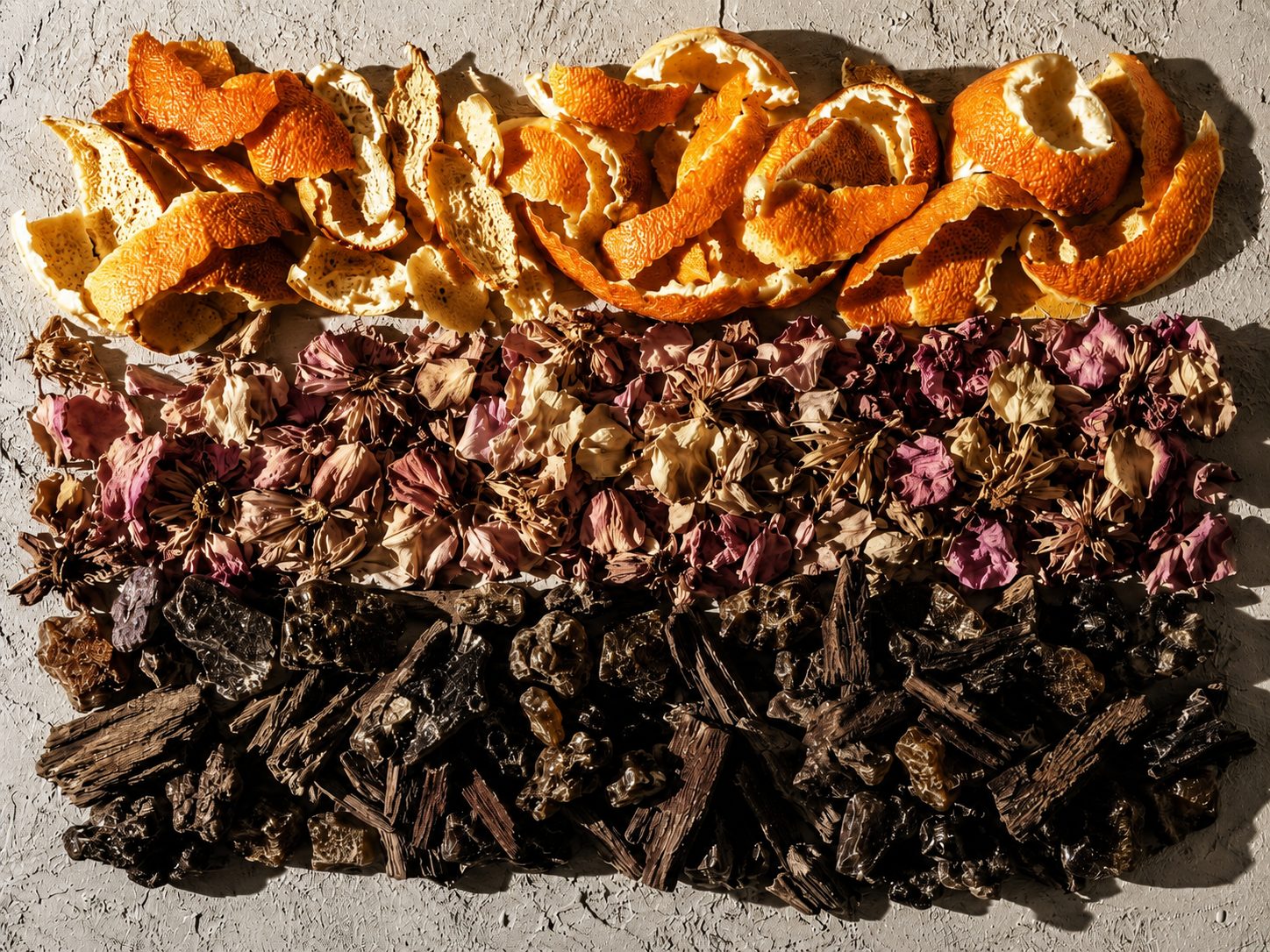
A fragrance pyramid looks orderly. Three levels, a handful of notes, everything apparently waiting for its turn.
The perfume itself is not so well behaved.
From the moment it touches your skin, its materials are evaporating, overlapping and altering one another. Some speak loudly and leave quickly. Others begin quietly and stay until morning. The pyramid is our way of drawing that movement. It is useful, but it is not the formula, and it is certainly not the whole story.
01What the pyramid is really showing you
In its simplest form, a fragrance pyramid divides a perfume into three stages: top notes, heart notes and base notes.
The distinction is largely about volatility, meaning how readily a material passes into the air where your nose can detect it. Calkin and Jellinek, in Perfumery: Practice and Principles, describe perfumery materials as ranging from those that last only minutes on a smelling strip to those detectable weeks later, traditionally grouped into top, middle and base.
Think of a musical chord rather than three musicians entering one after another. All the notes are struck together. What changes is which part of the chord your ear, or in this case your nose, can follow most clearly.
Top notes: the first handshake. The top is what reaches you first. Citrus, green notes, light fruits, herbs and certain spices often appear here because the materials that build them are relatively volatile. They rise quickly, creating brightness, lift and immediate definition.
This opening carries an unusual amount of pressure. At a counter, it may be the only part someone smells before deciding whether to continue. I can spend months developing a fragrance that lives beautifully for eight hours, and the opening still has to persuade you to give it ten minutes. That does not make top notes superficial. A good opening establishes proportion. It is the first spoonful of a stock. You do not yet know the finished dish, but you can tell whether the foundation has been handled properly.

A pyramid is a map of movement, not a queue of ingredients.
Heart notes: where the fragrance lives. As the most volatile materials recede, the fragrance becomes easier to read. This is the heart. Florals, spices, aromatic herbs, fruits and softer woods are frequently placed here, though no material is permanently confined to one level. The same rose or lavender behaves differently depending on quality, concentration and what surrounds it.
The heart is where I look for the actual argument of a perfume. The top attracts attention, the base creates persistence, but the heart tells me what the perfumer was trying to build. Is the rose fresh, jammy, dusty or metallic? Is the lavender clean and brisk, or warm and hay-like? This is the part you live with after the introduction is over.
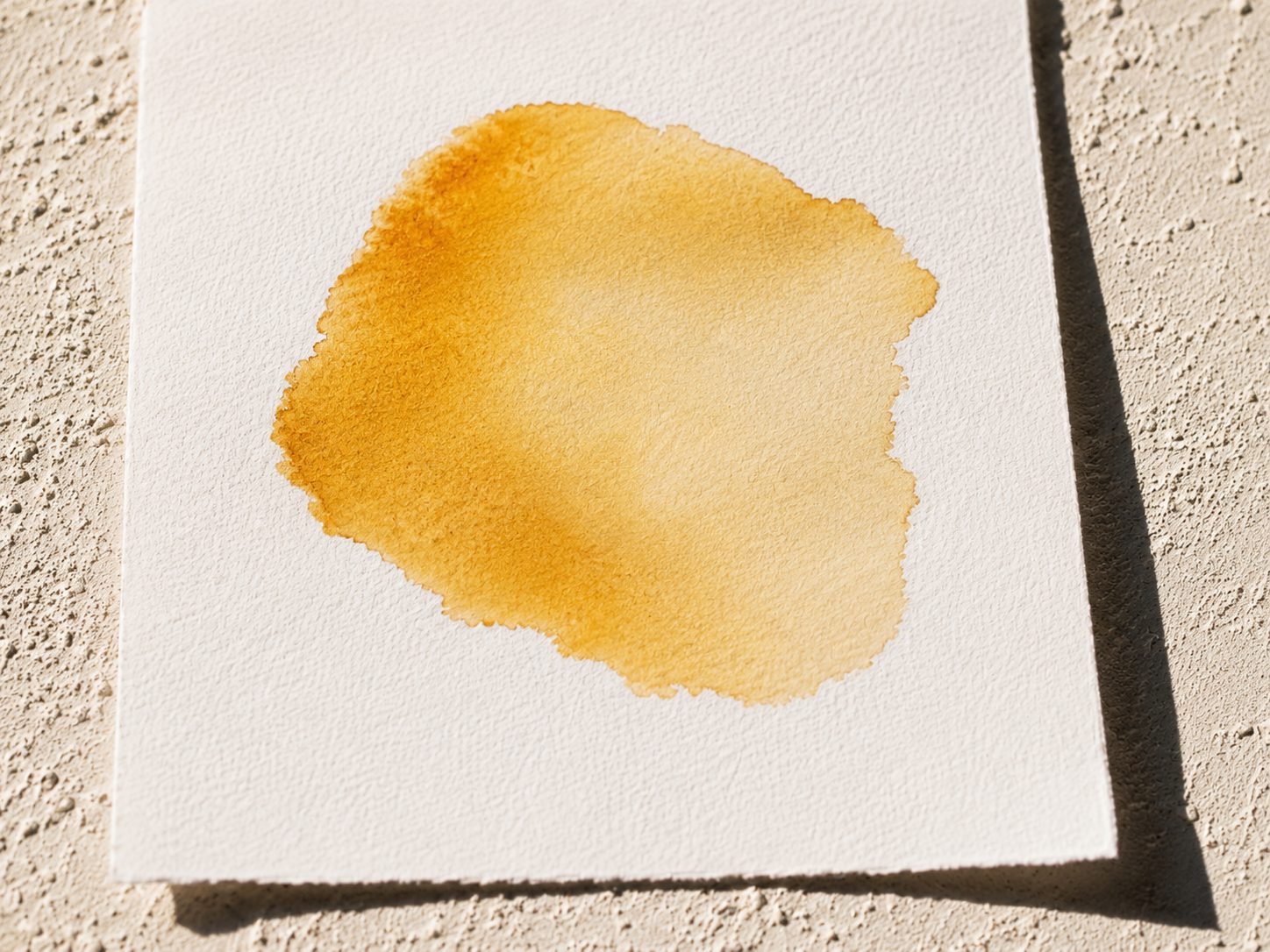
Base notes: the trace that stays. The base holds the slower, more persistent parts of the structure: woods, musks, balsams, resins, moss effects, vanilla and ambery notes. You may detect them from the opening, especially in a dense fragrance. They do not climb out of a trapdoor three hours after you spray. What happens is simpler. As brighter materials fade, the base becomes less covered.
The base is what you find on a cuff at the end of the day, sometimes clearer on clothing the next morning. It tells you how the perfume resolves itself. Some bases become dry and quiet. Others grow sweeter, smokier or more animalic as the hours pass.
Not every house publishes a full three-tier breakdown. Many give only a single unstructured list, and that absence is itself informative. Nor does a long list mean a more complicated perfume, or a short one a simple formula. The list tells you how someone chose to describe the fragrance, not how many materials were weighed into the concentrate.
02What the pyramid hides
The neatness is the fiction.
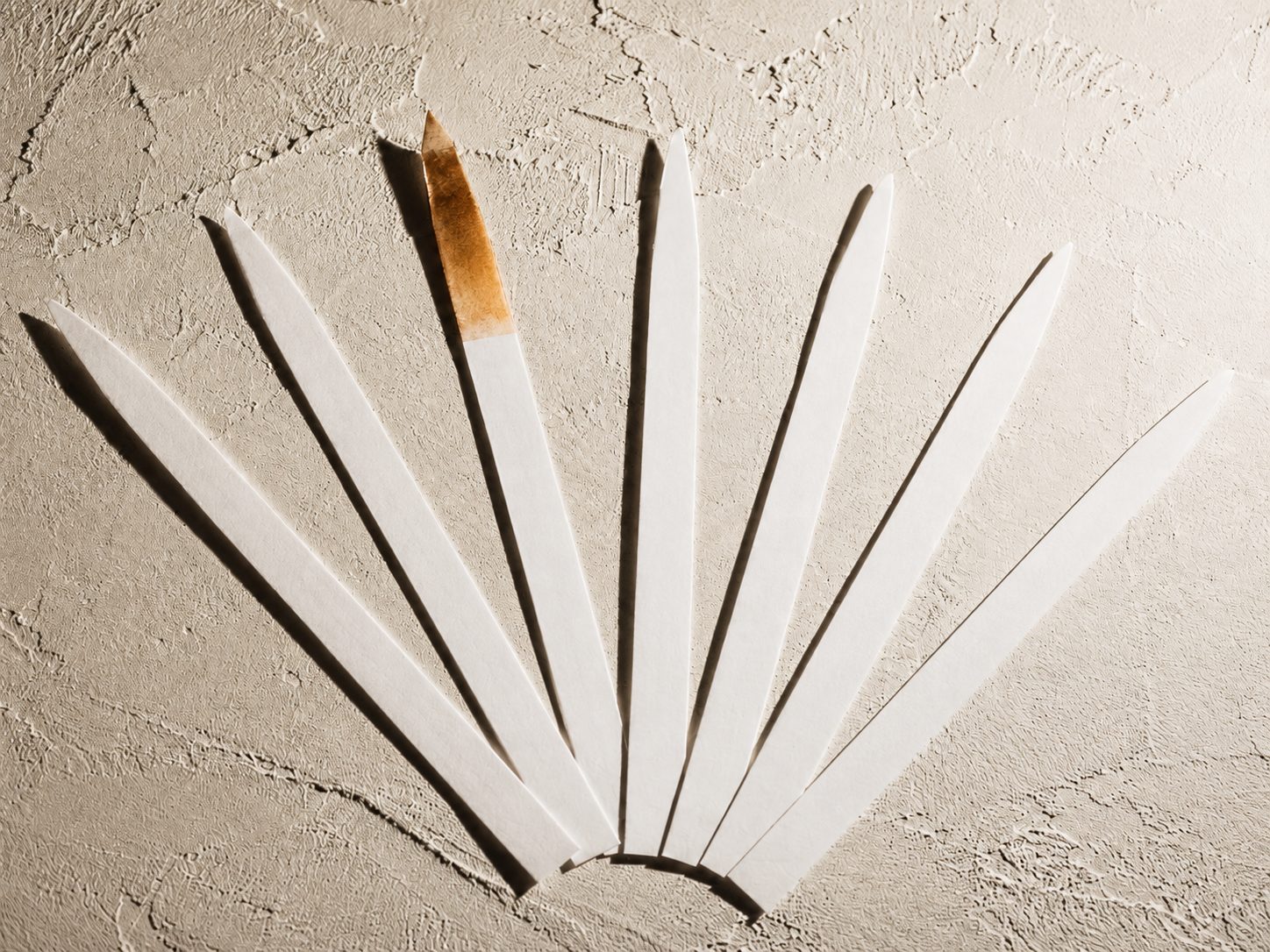
Every material is present from the first spray. Nothing waits politely behind a curtain until the level above it has finished. Laboratory studies of fragrance evaporation have found different diffusion rates among individual odorants, and differences between evaporation from skin and from inert surfaces. This is why the same fragrance can feel slightly different on a blotter, your wrist and your shirt. The formula has not changed, but the surface, temperature, moisture and surrounding air have.
The pyramid also hides a more important fact: a note is not necessarily an ingredient. A pear note may be an accord, several materials combined to create the impression of pear. A leather note does not require leather. A marine note does not mean seawater was added to the bottle. Notes are recognisable effects, often assembled from materials that smell quite different when examined alone.
Jean-Claude Ellena has been blunt about this. In a 2025 interview he said he despises the way audiences are handed a run-down of a perfume's notes, arguing that a scent should be understood as a complete composition rather than dissected into a list. His objection is understandable. While developing Un Jardin sur le Nil for Hermès, he created the impression of green mango without reproducing a mango literally. Chandler Burr reported that an early version used thirteen ingredients, with bitter orange for freshness and a grapefruit material for acidity, and that some materials interacted in unexpected ways, sometimes producing apricot or mushroom effects instead of the intended result.
That is real composition. One material alters the apparent shape of another. Two smells can meet and produce a third that neither possessed alone. The pyramid hides those relationships. Yet I still teach it, because a useful simplification is better than no language at all. The mistake is not using the pyramid. The mistake is treating it as a laboratory disclosure.
How to test a pyramid properly. Do not smell once and begin checking notes off a list. Give the fragrance three appointments.
Smell the change first. Read the list second.
At ten minutes, study the opening after the initial cloud of alcohol has dispersed. Ask about shape before ingredients. Is it bright, cold, tart, green, peppery, watery or sweet? Then look at the published top notes and see whether they help name what you already noticed.

At one hour, return to the heart. Do not search desperately for every flower and spice. Find the centre of gravity. What is now holding the fragrance together? Has the opening softened into flowers, turned powdery, or moved towards wood?
At six hours, smell the skin and the clothing separately. What remains? Is it a faint version of the heart, or has the perfume changed character? Can you now understand why a particular musk, resin or patchouli was placed in the base?
These times are checkpoints, not laws. A light cologne and a dense extrait will not move at the same speed. Weather, application and skin all matter. The point is to smell a developing object, not to force it into a stopwatch.
03Reading a real pyramid
Consider English Pear & Freesia by Jo Malone London, a fragrance with a particularly clear three-part description. The house names Williams pear as the top, freesia as the heart and patchouli as the base. It also calls the pear an accord, which immediately tells us that pear describes a constructed effect rather than a complete ingredient declaration.
Top: Williams pear accord. At the opening, do not ask only whether you can smell pear. Ask what kind of pear has been built. Crisp or soft? Green or ripe? Transparent or syrupy? The accord suggests fruit with a juicy, rounded quality. That gives you a direction, but your nose has the final word. The pear supplies light, moisture and immediate recognisability. It gives the perfume a shape you can grasp before the quieter floral and earthy elements arrive.
Heart: freesia. As the opening settles, freesia occupies the middle. It is a useful example of why note lists must not be read literally. A recognisable freesia effect can be built from synthetic materials, adjusted to feel cooler or more metallic. So the question is not whether a freesia flower was placed in the formula. The question is what the floral effect does. Here, it acts as a bridge. It keeps some of the pear's freshness while moving the fragrance away from obvious fruit, introducing a clean floral body without weight.
Base: patchouli. Patchouli sits at the bottom. Do not expect the pear and freesia to vanish, followed by a sudden blast of patchouli. Smell for a gradual change in balance. As the brighter effects quieten, the patchouli gives the fragrance a drier, darker, more grounded outline. It may even change how you remember the pear. What first seemed purely juicy can feel warmer or more autumnal once the base is clearer. That retrospective shift is one of perfume's pleasures.
Read together, the three notes form a sentence. Pear provides the first image. Freesia extends and softens it. Patchouli gives it weight. That sentence is more useful than treating the pyramid as three separate boxes.
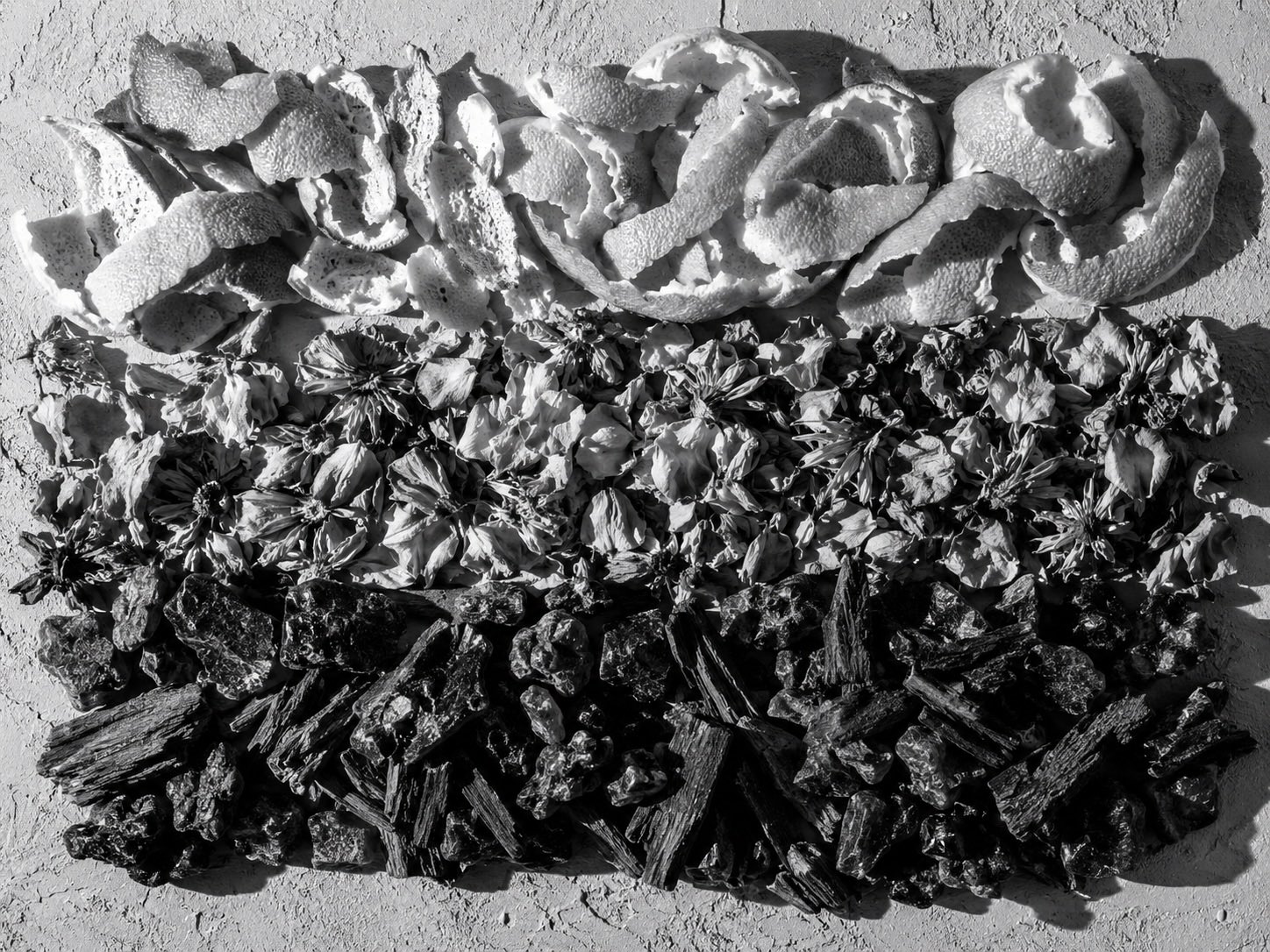
When a fragrance carries only an unstructured list, there is no declared order to follow. The perfume may behave in a more linear way, the house may prefer to describe it as a single chord, or it may simply have chosen not to disclose a hierarchy. The absence does not tell you which. It only tells you not to invent one.
The best way to read any pyramid is to reduce it to three questions. What arrives first? What becomes the central idea? What remains when most of the fragrance has gone? Once you can answer those, the pyramid has done its job. Put the list away and smell the perfume.
Analysis drew on the Osmagora fragrance library.
Robert R. Calkin and J. Stephan Jellinek, Perfumery: Practice and Principles, John Wiley & Sons, 1994.
Jean-Claude Ellena interview, Paris Perfume Week, published 10 January 2025.
Chandler Burr, 'The Scent of the Nile', The New Yorker, 6 March 2005.
Jo Malone London, official English Pear & Freesia fragrance page.
C. Vuilleumier, I. Flament and P. Sauvegrain, 'Headspace analysis study of evaporation rate of perfume ingredients applied onto skin', 1995.


