A page gives you rose, amber, chypre, clean, intense and woody, then quietly assumes that you know these words belong to different systems. They do. One may name a material. Another describes an imagined smell. A third places the entire fragrance on a historical map. A fourth may have been chosen largely because it looks persuasive on a bottle.
The distinctions matter. Without them, a perfume description can feel like a list of beautiful but unrelated nouns. Once they are understood, the same description begins to reveal structure.
What the perfume says it smells of
Note: a single material, or a single named smell
A note is the smallest named unit in a perfume description. It tells you that a particular smell can be noticed, or is intended to be noticed, within the fragrance.
Sometimes that name corresponds closely to a perfumery material. Bergamot oil, patchouli oil and vetiver oil are all real materials available to a perfumer. At other times, the note names an effect rather than one ingredient. Sea breeze cannot be distilled from the coast. Suede is usually reconstructed. Fig fruit is commonly represented through an accord because the fruit itself offers little usable essential oil. (IFRA)
Even a familiar note such as rose does not disclose the formula. The fragrance may contain rose absolute, rose oil, synthetic materials with rosy facets, other floral ingredients, or some combination of them. IFRA describes fragrance itself as a mixture of carefully measured natural and manufactured ingredients. Its ingredient glossary also uses the word note for recognizable olfactory qualities, including floral, fruity, citrus and amber effects. (IFRA)
This is why a list of notes should not be mistaken for an ingredient label. In Osmagora, a note means a named smell attributed to the fragrance, not a verified disclosure of everything inside the formula.
Across the 18,931 fragrances in Osmagora’s library on 20 July 2026, there are 14,907 distinct note names. That number does not represent 14,907 botanically or chemically distinct materials. It reveals how enormous and inconsistent the descriptive vocabulary has become. Different houses may give similar effects different names. One may say cashmere wood, another pale woods, another blond woods. The words multiply faster than the smells.
Amber is a particularly useful warning. In perfumery, an amber note usually does not mean fossilized tree resin. It commonly describes a warm accord built from materials such as labdanum, benzoin and vanilla, sometimes supported by tonka or balsams. (The Perfume Society)
A note, then, is best read as a sensory promise: look for this smell here.
Accord: when several materials become a new smell
An accord is created when two or more materials are combined so that the nose perceives a coherent effect that is not reducible to any one of them.
The musical analogy is useful. A chord contains individual notes, but what matters is the relationship between them. Remove or alter one, and the character of the whole may change.
An amber accord may combine vanilla-like sweetness, balsamic resin, warmth and woodiness until the result smells recognizably “ambery”, even though no single bottle on the perfumer’s bench contains the complete smell called amber. A fig accord may assemble green, milky, woody and fruity facets to suggest the leaf, sap, skin and flesh of a fig tree. (The Perfume Society)
Accords can be small building blocks inside a formula, or they can provide its central identity. IFRA itself describes perfumers as shaping compositions through top, heart and base accords, creating an olfactory progression over time. (IFRA)
This is where ordinary perfume language becomes slippery. An accord can also be listed as though it were a note. “Leather” might refer to a recognizable leather accord. “Marine note” may mean a constructed marine effect. “Amber” may be an accord, a listed note, or the family of the entire fragrance.
The context tells you which meaning is intended.
A note is a name. An accord is an event.
The large map, and its stranger shapes

Family: the dominant architecture
A fragrance family describes the broad character of the composition.
It is not an inventory of every note inside it. A floral fragrance may contain woods, spices and musk. A woody fragrance may open with citrus and pass through flowers before reaching its dominant woody character. The family tells you where the fragrance ultimately belongs on the map, not every road it takes to get there.
The difficulty is that there is no single compulsory map.
Michael Edwards developed his own classification system and Fragrance Wheel, which arranges fragrances by family and by their relationship to neighbouring styles. His database classifies perfumes by family, note and sub-note, and the Fragrance Foundation presents his work as a major industry reference. The system remains privately developed and copyrighted, even though it has become widely influential. (fragrancesoftheworld.com)
Other institutions preserve somewhat different genealogies. The Osmothèque, for example, teaches historical families through archetypal fragrances and the evolution of major accords. Its categories do not always align perfectly with the current Edwards wheel. Classification is therefore an informed judgement, not a laboratory measurement. (Osmotheque)
Osmagora uses families as practical routes into the library. As of 20 July 2026, the largest major groups are Floral, with 4,393 fragrances, followed by Amber/Oriental, 4,011, Woody, 3,047, Gourmand, 1,859, Citrus, 1,679, Fruity, 1,111, Aromatic, 831, and Chypre, 407.
The double label Amber/Oriental is deliberate. In 2021, Fragrances of the World announced that it would replace Oriental with Amber throughout its English-language classifications, describing the older word as outdated and, in some contexts, offensive. Older catalogues and house descriptions still contain the previous term, so Osmagora preserves it for recognition while favouring the clearer modern label.
Chypre and fougère: families that describe shapes
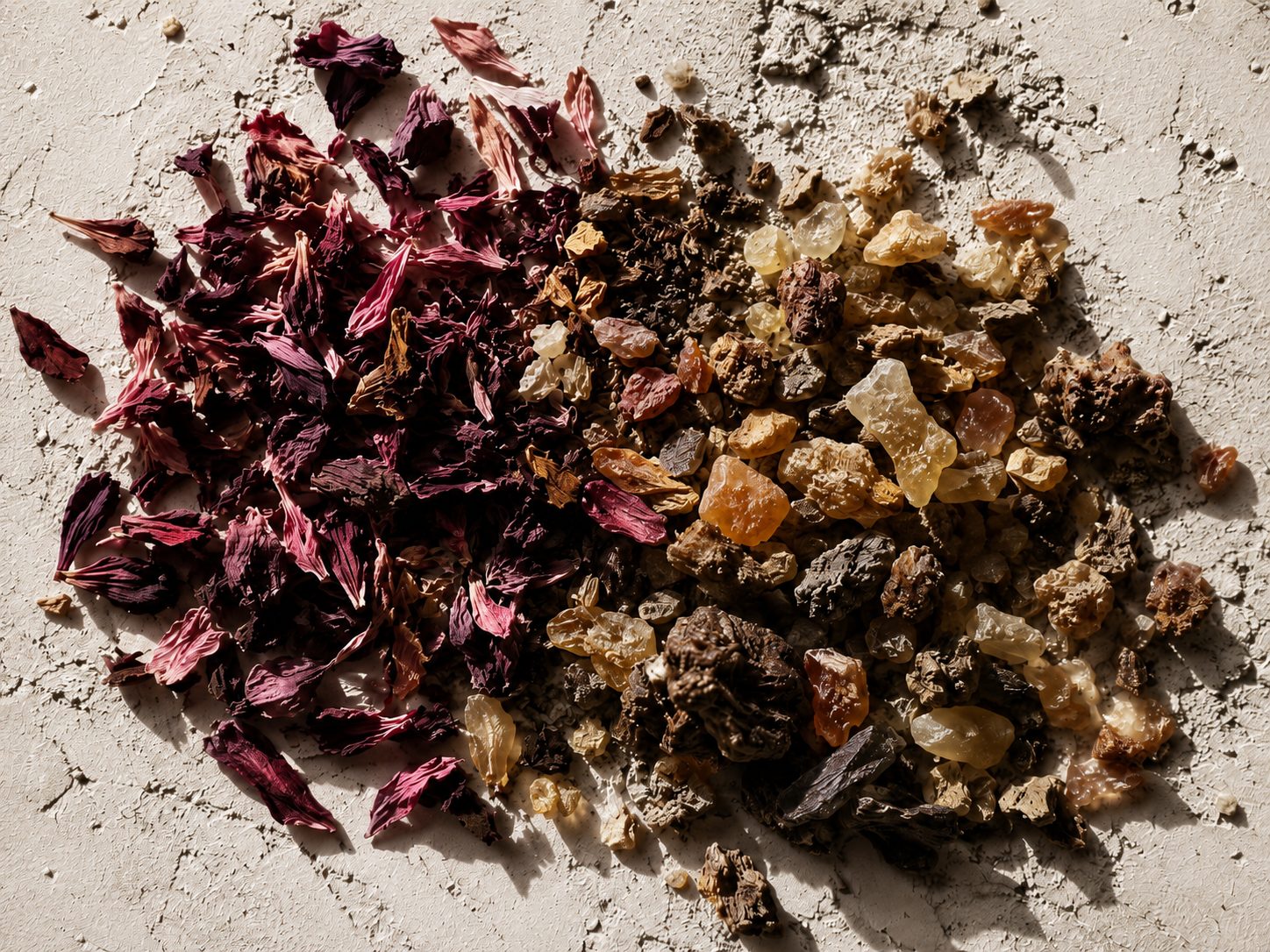
Some families are named after an obvious dominant smell. Citrus smells citrusy. Floral fragrances are built around flowers.
Chypre and fougère are more abstract. Their names describe inherited structures.
A classical chypre places brightness against shadow. Bergamot provides a dry citrus lift, while oakmoss, labdanum and patchouli form a darker, mossy and resinous foundation. Flowers, fruit, leather, herbs or woods may be added, but the identity lies in that contrast between the luminous opening and the dry, earthy base. (The Perfume Society)
The word chypre comes from the French name for Cyprus. François Coty’s Chypre, released in 1917, became the influential model from which the modern family took its name, although mossy Cyprus-inspired perfumes existed before it. (The Perfume Society)
A chypre is therefore not a perfume that smells of one ingredient called chypre. It is a recognizable arrangement of contrasts.
A fougère works in much the same way. The word is French for fern, but the structure is not a literal extraction of fern leaves. The traditional form brings together aromatic lavender, coumarin’s sweet hay-like warmth, and a mossy or woody base, often with bergamot, geranium and herbs around them. (Cambridge Dictionary)
Houbigant dates Paul Parquet’s Fougère Royale to 1882 and identifies it as the composition that established the family. Fragrance Foundation France, reporting an Osmothèque presentation, described the name itself as something like marketing before marketing: the fern supplied an image of green nature, while the actual accord was built around lavender, coumarin and oakmoss. (Houbigant Paris)
The fern was the dream. The accord was the engineering.
Why chypre has become relatively rare
Chypre is the smallest major family in Osmagora’s current library, with 407 fragrances. Classification choices account for part of that number, but the changing treatment of oakmoss is also central to the story.
Oakmoss has not simply been banned from perfumery. IFRA classifies oakmoss extract under restriction and specification. Its standard links the restrictions directly to atranol and chloroatranol, sets different maximum concentrations according to product category, and requires each of those two constituents to remain below 100 parts per million in oakmoss extracts. The stated risk-management concern is skin sensitisation. (IFRA)
This narrowed the traditional palette. Perfumers can use treated materials, alternative moss effects and new constructions, but recreating the dense oakmoss presence of an older formula is no longer a simple matter. Modern chypres still exist. They may simply express the old shape with different materials, or be classified elsewhere when the mossy structure becomes too faint.
The restriction, the reformulations and their effect on the family deserve their own examination. They are explored further in Article 14.
Families do not tell you every note. They tell you the direction of the whole.
What the remaining words really tell you
Some terms are description. Some are positioning.
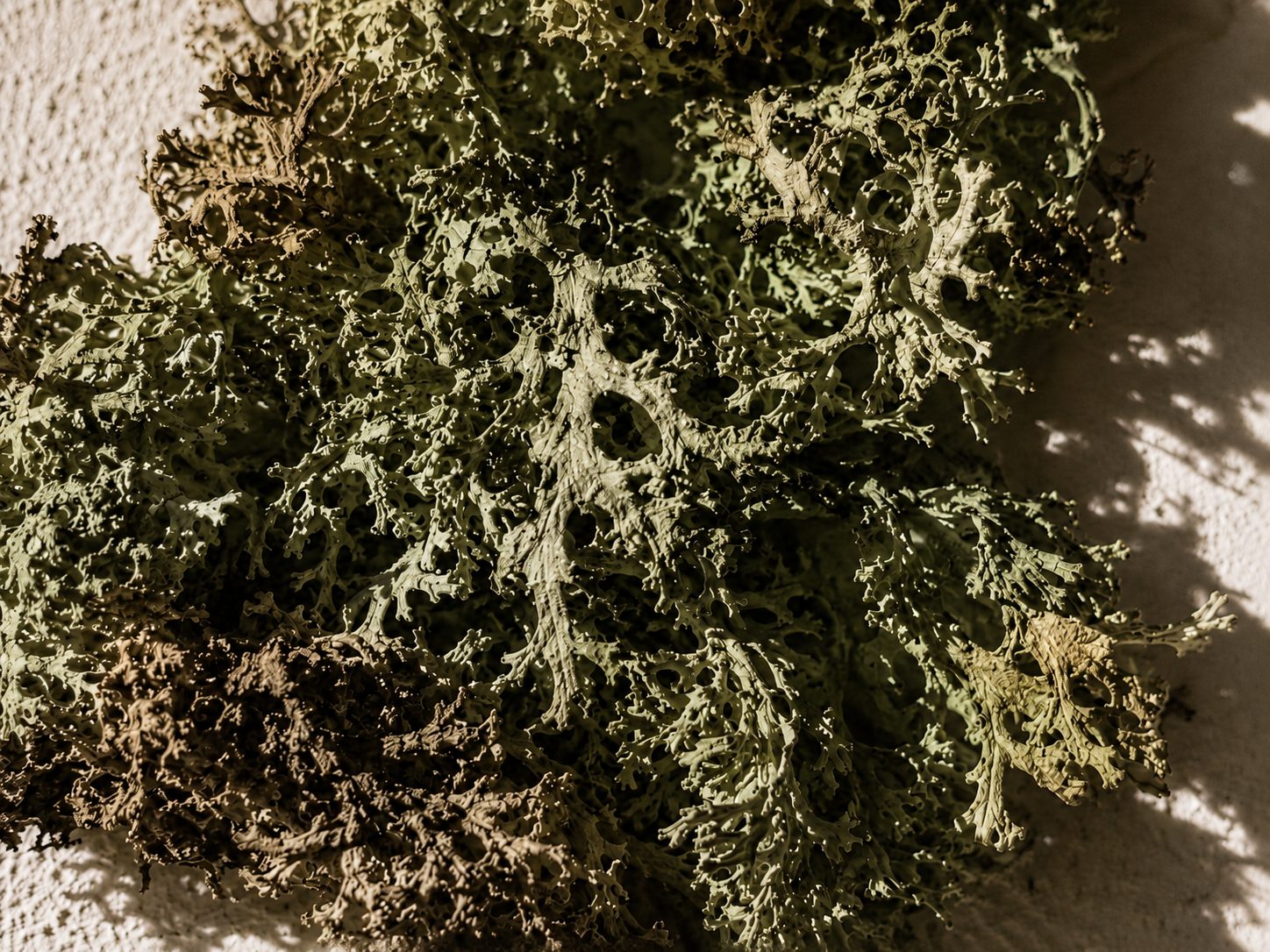
Perfume language often borrows the authority of science without actually being scientific.
Clean is an olfactory description. It may suggest soap, laundry, musk, citrus, aldehydes or airy woods. IFRA’s glossary, for example, describes an overarching aldehydic impression through the smell of clean, ironed linen. The word tells you about an association. By itself, it does not identify a material or a fragrance family. (IFRA)
Blue is usually a commercial style cue rather than a fixed technical category. It often gathers fresh, aromatic, marine, citrus, woody or ambrox-like effects under one visual idea, but there is no single formula that makes a perfume blue. Osmagora treats it as a descriptive style tag when the term is supported by the fragrance’s presentation or reliable description, not as chemistry.
Intense, elixir, absolu and sport usually describe a product’s intended position within a collection. They may imply deeper, fresher, sweeter or more concentrated variations, but the word alone does not disclose the formula or percentage of aromatic concentrate. Recognized concentration terms such as parfum, eau de parfum, eau de toilette and eau de cologne are more informative, although their ranges can still vary. (fragrancesoftheworld.com)
Even apparently precise words can operate at several levels. Amber may be a note, an accord or a family. Aromatic can describe an herbal facet or a larger family. Musk may identify a broad olfactory effect rather than one particular molecule.
The honest question is not simply, What does this word mean? It is, What job is this word doing here?
How to use the Osmagora filters
Osmagora separates these layers so they can be useful rather than decorative.
Use the family filter when you want the broad direction. Floral, woody, gourmand and chypre describe the overall architecture.
Use the note filter when a particular smell matters to you. Rose, vetiver, coffee, incense or peach narrow the field by recognizable detail.
Use an accord or style filter when you are looking for a constructed effect, such as amber, leather, marine, powdery or clean. These words may cross several families.
Then combine them as layered questions.
Floral + incense asks for a floral structure with a resinous, smoky detail.
Chypre + peach asks for fruit placed over a dry, mossy architecture.
Gourmand + coffee asks for an edible style centred on roasted bitterness rather than sweetness alone.
Woody + rose asks for rose held inside a structure dominated by woods, not necessarily a conventional floral bouquet.
Start with the family when you know the atmosphere. Start with the note when you know the smell. Add a second filter only when it expresses something you genuinely want, not because more filters appear more knowledgeable.
You do not need to memorise an entire wheel. You need only recognise the level at which a word is speaking.
Is it naming a smell?
Is it describing a construction?
Is it placing the fragrance on a map?
Or is it trying to make the bottle sound more desirable?
Once that distinction becomes instinctive, the vocabulary stops guarding the door. It begins to let you in.
Osmagora data source: Library snapshot supplied by Osmagora, 20 July 2026. Counts will change as the library expands.