Becoming a nose: the real route

A perfume can make its maker seem almost supernatural. The story usually begins with a child who noticed jasmine before anyone else, or an adult who could separate a room into invisible layers of wood, skin, smoke and rain. Then comes the word nose, as though the profession were an organ rather than an apprenticeship.
The hiddenness helps the myth. Only a minority of fragrances in wide circulation name the person who made them. Most houses still do not consistently credit their perfumer. That is not merely a data problem. It is a fact about an industry that sells authorship selectively, while keeping much of the actual labour behind the bottle out of sight.
So let us begin without incense around the answer. You do not become a perfumer because someone once told you that you have a good nose. You become one by entering a very small training pipeline, or by building a slower independent education, then repeating the same acts of smelling, remembering, weighing, correcting and explaining until instinct becomes reliable.
01The gift, and the gate
Natural sensitivity helps. So do curiosity, memory and the patience to notice fine differences without becoming bored by them. But professional schools do not admit a childhood anecdote. They admit a candidate, then test what that candidate can do.
At ISIPCA in Versailles, the current Scent Design & Creation programme runs for three years in partnership with IFF. Published tuition for the 2025 to 2028 cohort is 12,500 euros a year, 37,500 in total, plus a 280-euro application fee. Applicants need at least a two or three-year degree, preferably scientific, and non-native English speakers need specified language scores. Selection moves from application and interview to an IFF olfactory test, a creative presentation and a panel. The school and IFF do not publish a seat cap, though a June 2026 anniversary release said the programme had trained more than 180 people from 40 countries since 2016, which averages to a very small cohort each year rather than a promise of places.
Talent opens the door in the story. Repetition opens it in the lab.
The Grasse Institute of Perfumery publishes a harder number. Its International Technical Degree in Fragrance Creation and Sensory Evaluation has twelve places. The course runs eighteen months, one year in the school and a six-month internship, with a fee currently shown at 13,500 euros plus 150 for the admission tests. The school says it receives more than two hundred applications, and tests calculation, logic, creativity, olfactory recognition and interview performance. When I last checked, the page still displayed an old application window, so the next dates need confirming directly rather than guessing.
Givaudan's school is a different proposition. It is not a tuition product. It is a paid, four-year company traineeship, mainly in France and Singapore, followed by appointment as a junior perfumer if the training is completed successfully. A 2026 recruitment notice asked for at least a bachelor's degree, strong olfactory ability, advanced knowledge of perfumery, demonstrated creativity, English, and willingness to travel and work where the company needs you. It also said only a handful would be accepted, and that vacancies can take years to appear.
Who funds the route depends on which door opens. ISIPCA lists personal and company funding. Grasse charges the student, though a fragrance company sponsors each class. Givaudan pays the trainee. The romance is shared. The financial risk is not.
02Before the formula comes the apprenticeship
The first serious task is not self-expression. It is memory.
Givaudan says its trainees memorise around 500 ingredients across the four-year curriculum. At dsm-firmenich, trainee technical perfumer Laure Becquet described a three-year challenge to learn roughly a thousand smells, with mornings that included a blind test of five materials, followed by formula exercises, laboratory work and more smelling with experienced perfumers. The figures are not contradictory. Companies build different palettes for different roles, categories and proprietary materials.
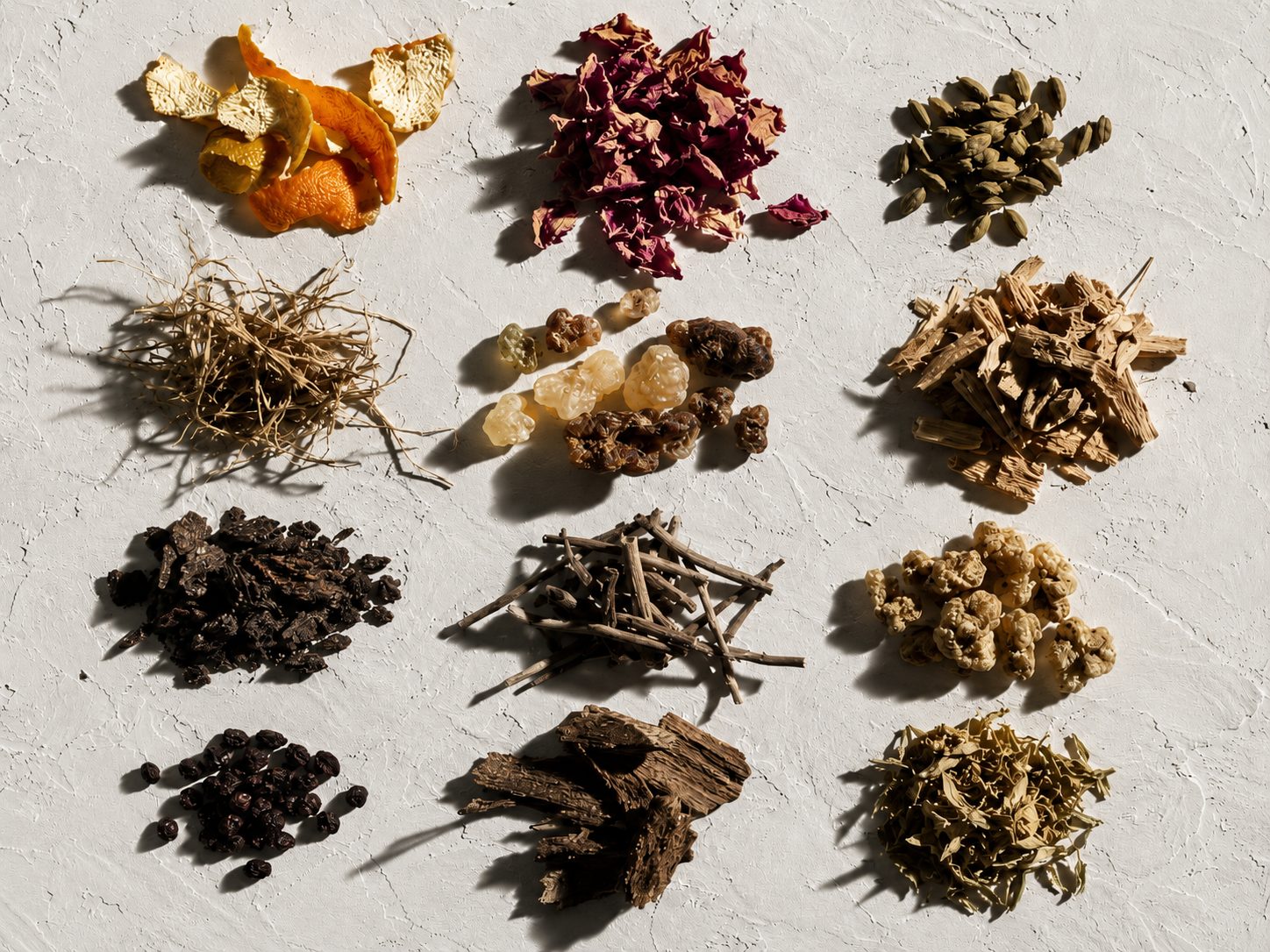
The training is repetitive because a material has to be learned across concentration, evaporation time and context, not as a single word. You smell it fresh, then later. You compare near-neighbours. You build a vocabulary precise enough to communicate with another person, and a memory stable enough to recognise the material without seeing its label. The perfumer Till Noack described the beginning plainly: "It's like learning a new language."
Only after the alphabet comes grammar. Students construct accords, study fragrance families and analyse the genealogy of established perfumes. Grasse combines raw-material recognition, accords, blending, regulation, analytical methods and applications such as shampoo, shower gel and cream. Symrise's graduate programme starts with about a year of foundations in Holzminden, then one to two years of international rotations, with periodic evaluations and mentor reviews.
The first formula is not a signature. It is usually an exercise.
Even then, the title perfumer does not arrive in one clean movement. Company ladders commonly pass through trainee and junior stages. Technical perfumers may spend their working lives adapting existing formulas rather than originating new ones. A perfumer's assistant weighs formulas, checks raw-material quality, prepares samples and reformulates when a material can no longer be used. An evaluator translates the client's brief, smells revisions, studies the market and guides the perfumer through feedback. This is why graduating from a perfumery programme is not the same as becoming the named author of a commercial fine fragrance. The schools themselves list evaluator, technical perfumer, development, laboratory, regulatory, marketing and sales roles alongside creative perfumery. The training is valuable partly because it teaches an industry, not only an art form.
There is an independent route, and it should be described accurately. It can teach materials, formulation and discipline. It does not automatically reproduce a company school's mentors, proprietary ingredients, international rotations, technical departments or live client work. In 2026, ISIPCA listed a short online introduction, Grasse a three-day discovery course and a two-week summer level, the Institute for Art and Olfaction an eleven-week online materials course, and supply houses everything from a modest starter kit to a large student raw-materials set. Independent learning is more accessible, not necessarily cheap. Its greatest cost is not the first kit. It is years without a guaranteed job at the end.
03The work after the dream
Once employed, a perfumer does not spend each morning waiting for inspiration to enter the room. The work begins with a brief, a category, a price, a market, a technical base and a deadline. Fine fragrance is only one part of the profession. Perfumers also create for detergent, shampoo, soap, deodorant, fabric care and home scent.
The formula is developed inside a group. Noack described perfumers smelling and refining alongside fragrance development managers, while technical specialists, sales, marketing and consumer-insight colleagues shape the project. There is beauty in that process, but it is negotiated beauty. The note you love may break the budget. A material may change the colour or stability of the base. A regulation, supply problem or client decision may send a formula back onto the scale. Reformulation is not a side task invented to annoy artists. It is part of keeping a fragrance producible.
Then there is credit. The person doing years of correction, testing and presentation may never appear in the launch story. The consumer usually receives less authorship information about a fragrance than about almost any other object they buy.
Do you need a nose unlike everyone else's? You need a functioning sense of smell and enough discrimination and memory to pass selection. Givaudan explicitly asks for strong olfactory ability, and Grasse includes blind raw-material tests. But the evidence does not support the comforting fantasy that expertise is merely discovered. Reviews of professional olfactory expertise report performance changes associated with extensive practice, and controlled studies show that odour identification can be trained, with some transfer to unfamiliar odours and tasks. You may begin with an advantage, as a musician may begin with a good ear. What separates the professional is the trained memory, the language, the technical judgement, the patience to revise, and the ability to make something for another person's brief without losing all of yourself inside it.
Before paying for a degree, test the part that brochures cannot test for you. Build a small, legally sourced palette. Smell it blind. Keep the same materials for months. Record concentration and time. Revisit an accord until the changes become smaller and your reasons become clearer. Notice whether repetition kills the fascination or deepens it.
If repetition kills it, you may love perfume without wanting the job. That is not failure. If repetition makes the material more mysterious, not less, then you have learned something useful. The route is narrow, expensive or fiercely employer-selective, and slower than the myth. It is also real.
Analysis drew on the Osmagora fragrance library.
ISIPCA, Scent Design & Creation programme and 2026 admissions, checked 20 July 2026; IFF and ISIPCA ten-year release, 16 June 2026.
Grasse Institute of Perfumery, International Technical Degree, and short-course listings, checked 20 July 2026.
Givaudan Perfumery School curriculum and 2026 trainee recruitment notice.
dsm-firmenich Careers interviews with Laure Becquet (1 September 2025) and Till Noack (30 April 2025); Symrise Perfumery School booklet, February 2026.
Institute for Art and Olfaction, Perfumer's Apprentice and PerfumersWorld course and kit listings, checked 20 July 2026.
J.-P. Royet et al., 'The impact of expertise in olfaction', Frontiers in Psychology, 2013; P. Morquecho-Campos et al., Chemical Senses, 2019.