
Creed, and the trouble with a founding myth

Creed asks the buyer to smell backwards through time.
The bottle arrives carrying more than liquid. It carries 1760, royal courts, seven generations, British tailoring, French perfumery and the suggestion that the formula in your hand belongs to a private history older than most modern fragrance houses. For someone considering an expensive bottle of Aventus, the reasonable question is not whether that story is attractive. It is whether the story and the documentary record are the same thing.
They are not quite the same thing. That does not make Creed unreal. It makes Creed more interesting.
01The story, and the record beneath it
Creed's current account begins in London in 1760. The house says James Henry Creed established a tailoring business on Conduit Street, serving British royalty and aristocracy, and that seven generations carried its discipline of materials and handwork into French perfumery. Its longer history page says a professional archivist traced the family through marriage certificates, nineteenth-century tailoring in Paris, an 1860 notice connecting Henry Creed with Queen Victoria and European courts, and an 1885 royal warrant. The same page now says plainly that the family did not always start out in the fragrance business.
That qualification matters. It is more careful than older versions of the Creed legend, which retailers often repeated as a continuous story of royal perfumes and scented gloves beginning in 1760. The present history page describes scented hemlines and perfumed leather gloves as common practices of the period. It does not, in that passage, produce a commission, formula, bottle, invoice or workshop record showing that the Creed business itself was making perfume at the time.
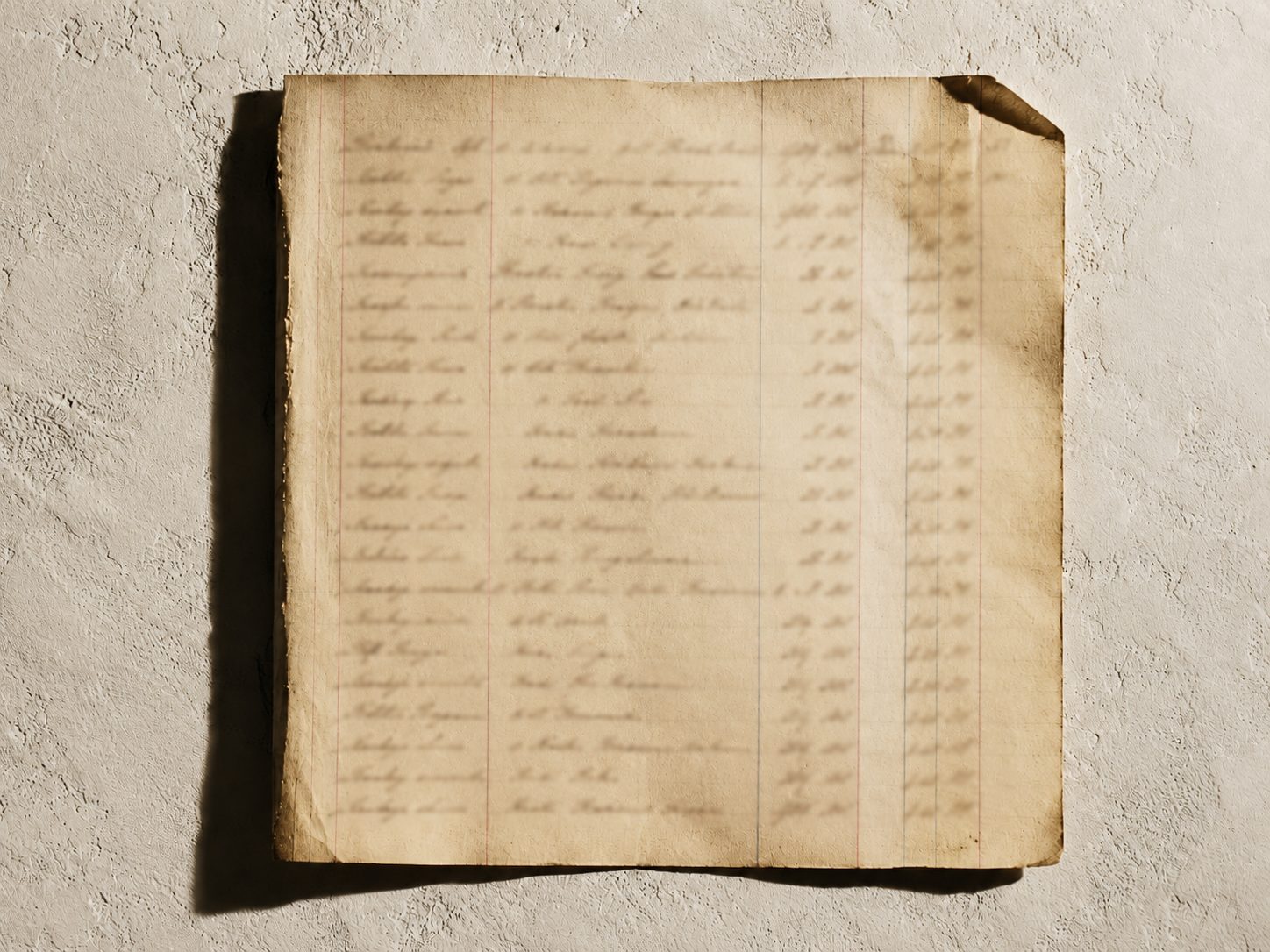
A lineage can be real while the legend built upon it remains unproven.
The tailoring history is not imaginary. The Metropolitan Museum of Art catalogues H. Creed & Co. as a French design house founded in 1850 and holds surviving garments, including a suit dated around 1918. The National Portrait Gallery identifies Charles Creed, born in 1906, as a fashion designer. These are independent institutional records of a genuine couture lineage. What they do not establish is a perfume house operating continuously from 1760. The public material supports a Creed family in tailoring, particularly from the nineteenth century onward. It does not independently verify the traditional launch dates attached to early Creed fragrances, or a continuous sequence of royal perfume commissions reaching back to George III.

Independent writers have raised the same point. In his 2021 book The Ghost Perfumer, journalist Gabe Oppenheim disputes parts of Creed's chronology and its accounts of authorship, drawing heavily on interviews with perfumers including Pierre Bourdon. His conclusions are contested reporting, not a court finding, and should be described as his work rather than adopted as settled fact. They do, however, identify the precise gap that matters. Documented tailoring history is not, by itself, documented perfume history.
The fair conclusion is narrower than either the advertisement or the takedown. Creed has a real family history in clothes. Its current public evidence does not fully support the larger claim of an uninterrupted perfume house founded in 1760. Until the underlying archive is published in a form historians can inspect, the oldest fragrance stories remain house claims.
02The company Aventus built
In February 2020, BlackRock Long Term Private Capital took a majority investment in Creed. Terms were not disclosed at the time, and Javier Ferrán joined as chairman and investor. This was the end of Creed as a wholly family-controlled business and the beginning of a far more explicit growth programme.
Aventus did not merely become Creed's bestseller. It became the engine that made the house scalable.
BlackRock later described what it had done in unusually direct language: geographic and channel expansion, new product development and a more focused marketing strategy. By 2023, when Kering agreed to acquire the whole of Creed, the house had dozens of branded stores, distribution through well over a thousand doors and annual revenue above 250 million euros. The Financial Times reported that Kering paid 3.5 billion euros. Ownership then moved again. On 31 March 2026, L'Oréal completed its acquisition of Kering Beauté, including Creed. Creed is therefore no longer a family house, a BlackRock asset or a Kering house. It now sits inside L'Oréal's luxury division.

The commercial centre of that transformation is Aventus. Introduced in 2010, it is built around a striking contrast: bright bergamot and a pineapple accord against birch, patchouli and musk. The opening is generous and immediately legible. The drydown turns that fruit darker, drier and more controlled. It is easy to understand why the structure travelled so well. It smells distinctive at first contact, but familiar enough to wear without ceremony.
Authorship is another place where the family story and the professional record need to be separated. Creed's own history places its modern fragrances under Olivier Creed's creative direction. Independent perfumer research and public profiles credit Jean-Christophe Hérault as the technical creator of Aventus, and record his mentorship under Pierre Bourdon. The most careful wording is that Aventus emerged under Creed's creative direction, with Hérault publicly credited as its perfumer.

Then there is the batch question. Aventus collectors have spent years comparing codes, openings, smoke levels, fruit and longevity, and the discussion runs to hundreds of thousands of forum views. The testimony is abundant, but it is still consumer testimony, produced under different storage conditions, bottle ages and testing methods. Creed's position is the opposite. The house says each batch is hand mixed, macerated and matured at its facility in Ury, France, ensuring consistency and integrity. No controlled, published comparison establishes how large any variation is, or what causes it. The honest answer is that the batch culture is real, while the size and source of the sensory differences remain unproven. For the buyer, this simplifies the decision. Do not pay a premium for a code because strangers have built a mythology around it. Sample the current stock from the seller you intend to use, and judge that liquid, on your skin, over a full day.
03What remains when the dates fall away
Creed's perfumes do not require a royal warrant to smell good.
Green Irish Tweed is the clearest example. Peppermint, verbena, citrus and galbanum lead into lavender, violet, woods, ambroxan and oakmoss. The effect is green without becoming rustic, polished without becoming sterile. Its elegance comes from proportion, not ornament. Silver Mountain Water takes a different route through bergamot, blackcurrant, orange, tea, an ozonic accord, musk and sandalwood, creating a cool, almost metallic cleanliness softened by fruit. Millésime Impérial sets bergamot, blackcurrant and violet leaf over orris, a salty marine accord, cedar, sandalwood and musk. It is less forceful than Aventus and more elusive, with a saline glow that can feel beautiful precisely because it never becomes heavy. Royal Oud is a useful correction to the house's loudest reputation. Its grapefruit, cardamom, woods and oud do not produce a dense Gulf-style oud perfume. The oud is restrained inside a dry, tailored woody structure, closer to cedar, spice and polished fabric than to smoke filling a room.
Across these perfumes the recognisable Creed habit is contrast. Citrus, fruit or aromatic green materials create lift. Woods, moss, musk and ambered effects give the base a clean, expensive-looking finish. The compositions tend to be spacious and immediately readable. Even when the note list is long, the perfume usually presents one clear silhouette. That signature is legible in the fragrances themselves, without any need for the founding date to be true.

So what are you buying when you buy Aventus now? You are buying a highly recognisable modern fragrance, a well-made object, global distribution, cultural status and the accumulated force of a story. You are also buying from a company that passed from family control to BlackRock, then Kering, then L'Oréal in six years. None of that tells you whether the perfume will move you. It tells you what portion of the price belongs to something larger than the formula.
Read Creed in layers. Accept the tailoring lineage where institutions support it. Treat the 1760 perfume chronology and old commission stories as house claims unless documentary evidence is made public. Credit technical perfumers where the professional record identifies them. Judge batch claims by sampling, not folklore. Then smell the fragrances without asking them to prove the past.
A perfume does not become less beautiful because its family tree is shorter than advertised. But beauty in the bottle cannot make the missing documents appear. The mythology may explain the price. Only the perfume can justify the purchase.
Analysis drew on the Osmagora fragrance library.
The Metropolitan Museum of Art, catalogue records for H. Creed & Co.; National Portrait Gallery entry for Charles Creed.
BlackRock Long Term Private Capital investment in Creed, February 2020; Financial Times reporting on Kering's 2023 acquisition.
L'Oréal completion of the Kering Beauté acquisition, 31 March 2026.
Gabe Oppenheim, The Ghost Perfumer, 2021 (contested reporting, attributed as such).
Creed official house history and product pages.