Why your old bottle smells different
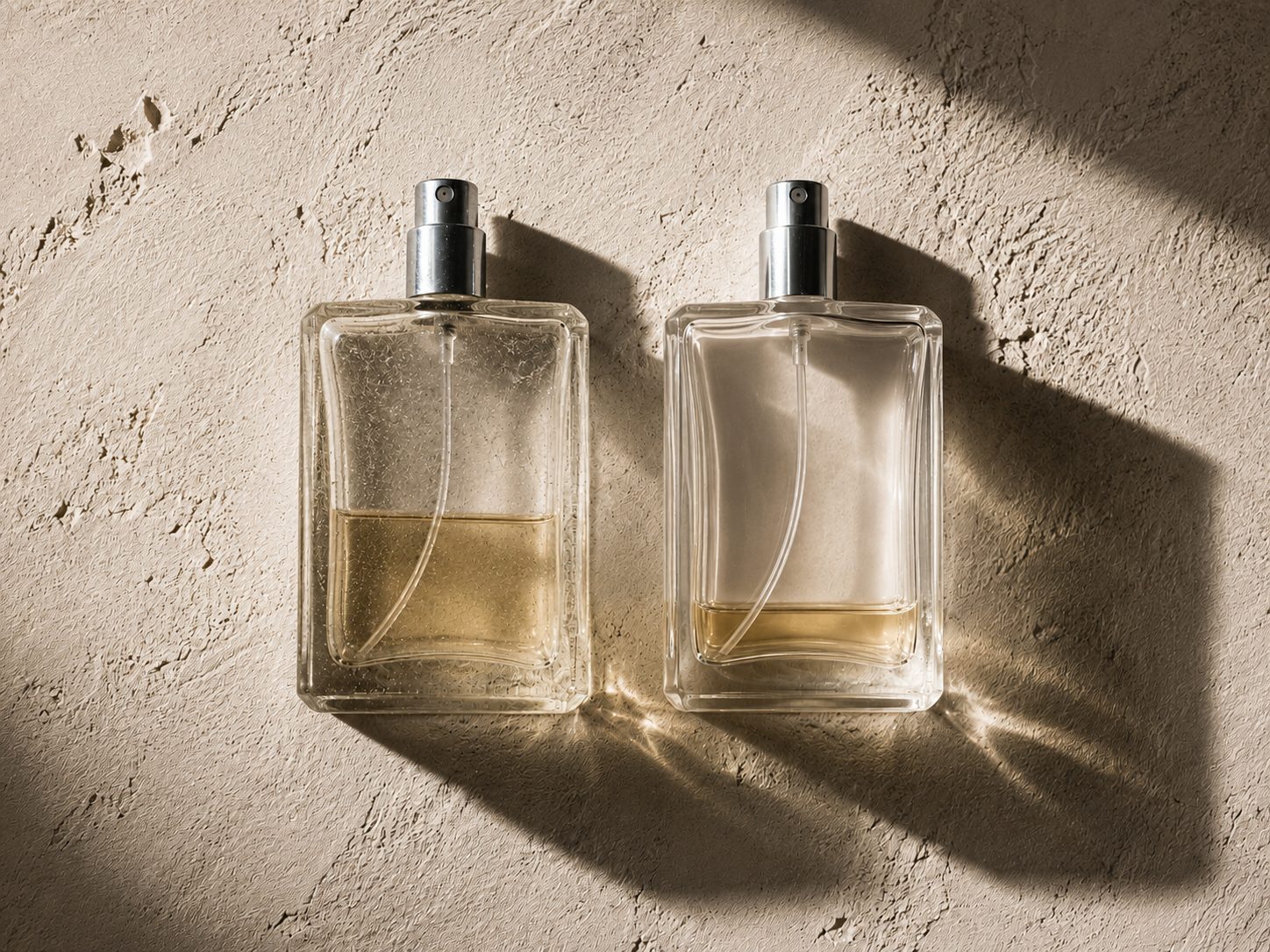
You know the moment before you admit it. The box is familiar. The glass catches the light the same way. You spray, you wait, and you search for the thing that used to arrive without effort: the bitter green shadow, the polished wood, the warm animal breath, the strange brightness that belonged only to this perfume.
It does not come.
Perhaps the opening is thinner. Perhaps the base has turned sweeter, cleaner, or oddly blank. You wonder whether your memory has quietly improved the past. Sometimes it has. But sometimes the perfume really has changed. Brands revise formulas while keeping the name and the bottle, and long-time wearers can be unusually sensitive to the difference, because they learned one fragrance in intimate detail. The loss is real. The explanation is usually less dramatic, and more tangled, than either conspiracy or corporate reassurance allows.
01The formula did not keep the name
Reformulation has three main causes, and they should not be collapsed into one. The first is regulation and safety. A material may be prohibited by law, limited by an industry standard, or newly subject to labelling and exposure rules. The second is cost. A house or licence holder may want a formula to meet a different concentrate price, or a supplier may have to solve a regulatory change without raising the agreed price. The third is supply. A crop can fail, a source can become protected or simply unavailable, a supplier can stop making a molecule, and war, energy prices and logistics can put a material out of reach. Industry reporting and perfumer interviews describe all three pressures.
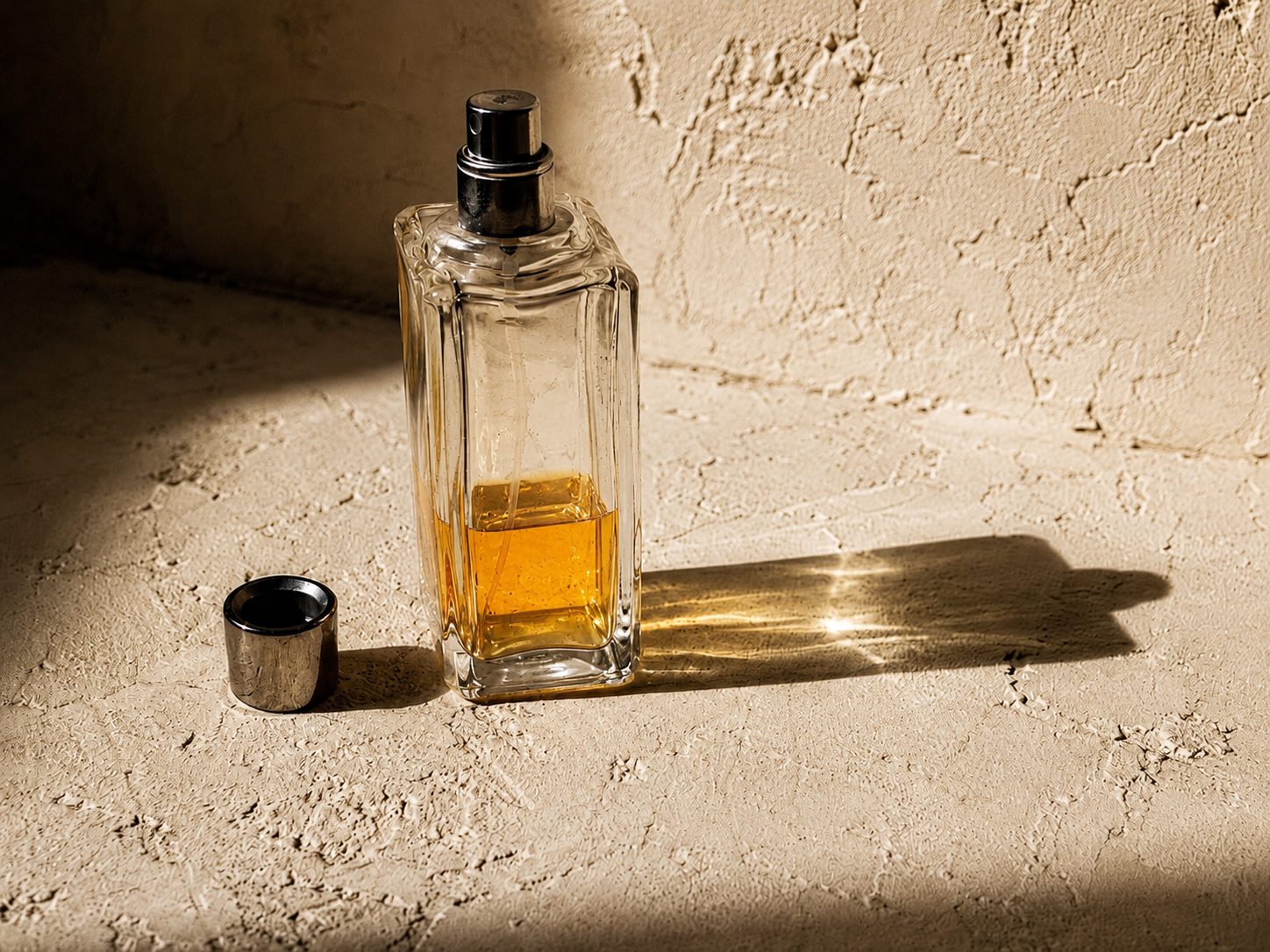
They do not tell the same moral story. Replacing a prohibited sensitiser is not the same as quietly thinning an expensive natural. Losing Indian sandalwood to overexploitation is not the same as choosing a cheaper woody accord. A formula can even become more expensive after a safety change: the perfumer Alexandra Kosinski has explained that a substitute for one restricted material could cost twice as much, while the price paid for the concentrate was expected to stay the same. This is why "IFRA ruined it" is so often too simple. The industry standards may be part of the chain, they may be one pressure among several, and sometimes they are not the pressure at all.
Memory can exaggerate. It cannot put a missing material back into a formula.
02What the rules actually say
IFRA is the International Fragrance Association, the global trade body for the industry. Its Standards are a self-regulatory risk-management system built on safety assessments reviewed by an independent expert panel. A Standard can prohibit a material, cap its use by product category, or set conditions such as purity. The Standards are voluntary in the legal sense but binding on IFRA members, which the association says account for about 80 per cent of global fragrance production by volume. Companies must still obey the separate laws of every market where they sell. The current notified framework is the 51st Amendment, notified in 2023; consultation on the proposed next amendment has closed but had not yet replaced it.
That distinction matters, because IFRA is not the European Union, and an IFRA restriction is not automatically a legal ban. European cosmetics law has its own requirements. A 2023 regulation expanded individual fragrance-allergen labelling after the EU's safety committee identified dozens of additional allergens, while keeping the long-standing declaration thresholds for leave-on and rinse-off products. Labelling is not the same as reformulation, but the transition can push manufacturers to adjust formulas or packaging. On an EU ingredient list, the fragrance composition is normally compressed into the single word parfum, followed by the allergens that must be declared above threshold. Two bottles can therefore show very similar ingredient lists while containing meaningfully different perfume formulas.
Safety can be necessary, and loss can still be real.
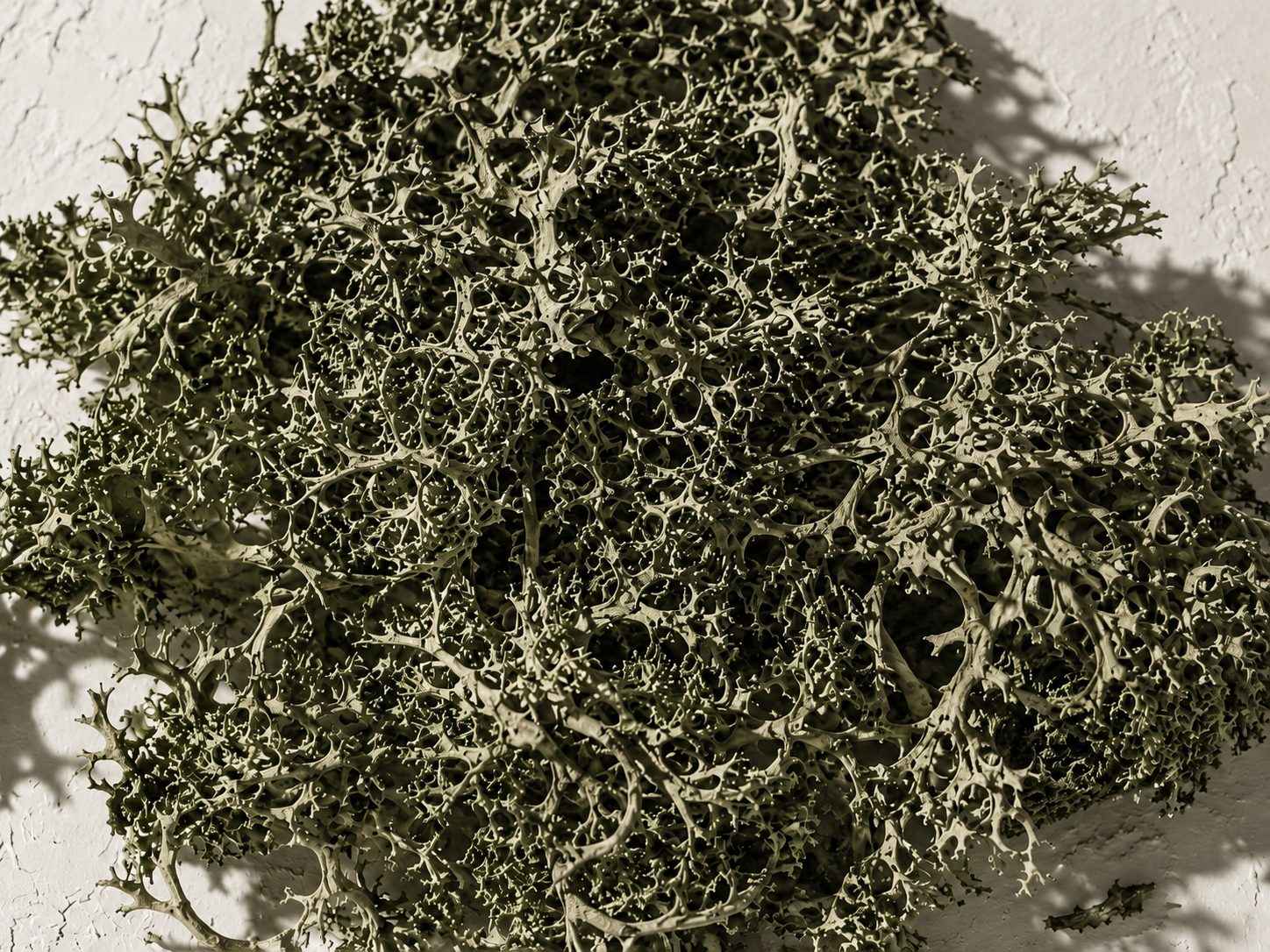
Oakmoss is where the abstract rules turn into a smell people mourn. Oakmoss absolute, from the lichen Evernia prunastri, gave the classical chypres their damp, bitter, shadowed depth. Two of its constituents, atranol and chloroatranol, became central safety concerns because of contact allergy, and the EU added both to its prohibited list, barring products that contain them from the market from 2019. IFRA did not prohibit every use of oakmoss extract. Its oakmoss Standard restricts fine fragrance to a small maximum percentage in the finished product and specifies that atranol and chloroatranol each sit below a low limit in the extract. Perfumers can work with treated low-atranol oakmoss, fractionated materials, and reconstructed moss effects, then rebalance the structure with woods and patchouli. It is not a perfect exchange. Removing or reducing one material changes the way the rest of the perfume rises, opens and dries down.
Look at the modern landscape and chypre is now the smallest of the major families by a wide margin, dwarfed by floral, while oakmoss survives as a listed note in only a modest slice of fragrances. Those figures do not prove that one regulation killed an entire family. They do show how marginal the classical chypre structure has become. And loss is not the only possible ending. Critics have documented restorations: in 2014, the reviewer Persolaise praised Thierry Wasser's reworking of Guerlain's Mitsouko for restoring lift and clarity after versions that had turned inward. The same perfume can be reformulated more than once, and a later version can move back towards what loyal wearers remember.
03How to tell what changed, and what to do next
A serious reformulation is rarely a one-for-one swap. Every material has its own odour, strength, evaporation curve and effect on its neighbours. Kosinski describes starting from the latest marketed formula, replacing the problem material where possible, then rebalancing the whole structure when the replacement disturbs it. The work can take from a month to two years, and larger houses may assign technical perfumers or whole teams, with the original creator preferred when available. Houses rarely announce the result, because continuity is part of what they sell. As Le Monde reported, brands fear that technical discussion will disturb the dream around a perfume. The silence does its own damage, because the wearer is left wondering whether the change is even real.
Batch variation is a different thing. Natural materials vary with harvest and processing, but professional manufacturing works to olfactory, physical and chemical specifications. A small shift between two fresh bottles can be normal. A repeated structural difference across several newer bottles, especially a missing base, altered sweetness, or different development over hours, looks more like reformulation. Your old bottle is not a perfect control either. Limonene, common in citrus materials, oxidises during handling and storage, and over time oxidation and storage can shift the balance of a perfume. A vintage bottle may smell darker, denser or rougher than it did when new. The comparison is still useful, but it is a comparison between two histories, not two untouched formulas.
How to run the comparison honestly. Compare the same concentration, not an eau de toilette against an eau de parfum. Spray both on blotters at the same time and smell at five minutes, one hour, four hours and the next day. Test more than one current bottle or sample before blaming a batch. Ask the brand directly whether the formula or supplier changed, though it may decline to answer. Save photographs of the box, the ingredient list and the batch code. None of these is proof on its own, but together they make the comparison less vulnerable to memory.
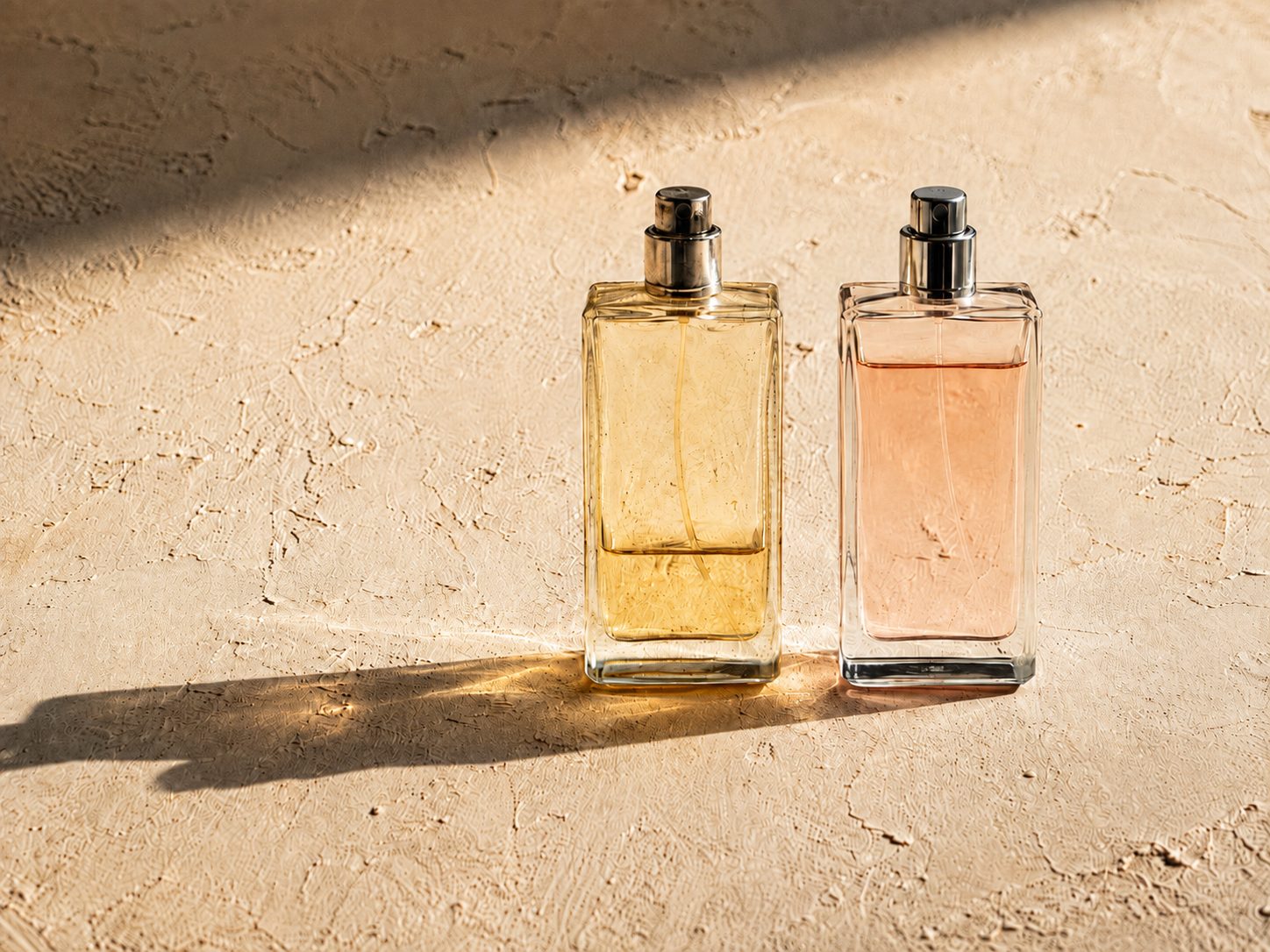
The vintage market can return a lost texture, but not certainty. Storage history may be unknown, citrus materials may have oxidised, and a bottle may even be counterfeit. The FBI has warned that counterfeit fragrances can contain unsafe contaminants, so provenance matters as much as a batch code. Buy from sellers who show the bottle, base, box, fill level and batch markings clearly, and who accept returns when authenticity is disputed. Treat sealed as a description of the packaging, not a promise of perfect preservation, and never pay more than you can afford to lose on a bottle whose history cannot be verified.
Before you go vintage, smell the current version without asking it to impersonate the past. Some reformulations are diminished. Some are simply different. A few are acts of restoration rather than surrender. The old perfume may be gone. What you smelled was still real. Understanding why it changed does not restore the bottle, but it gives the loss an honest shape.
Analysis drew on the Osmagora fragrance library.
Lionel Pailles, 'Why does the scent of classic perfumes change over time?', Le Monde, 2024.
Anne-Sophie Hojlo, interview with perfumer Alexandra Kosinski, Nez, 2020; Cosmetics Business on reformulation, 2026.
International Fragrance Association, IFRA Standards documentation (51st Amendment; oakmoss Standard, Amendment 49).
Commission Regulation (EU) 2023/1545 on fragrance-allergen labelling; Commission Regulation (EU) 2017/1410 on atranol and chloroatranol.
Persolaise, 'Review: Mitsouko from Guerlain', 2014.
Matura et al. on oxidised limonene, Contact Dermatitis, 2003; FBI, 'Counterfeit Cosmetics, Fragrances'.