Oud, and what you are really smelling
You spray a fragrance called oud and wait for the darkness. Perhaps you get rose and saffron. Perhaps raspberry, clean amber, leather or smoke. Perhaps something medicinal, polished and almost metallic. The first surprise is not that these perfumes disagree with one another. It is that the same word is being asked to name several different things.
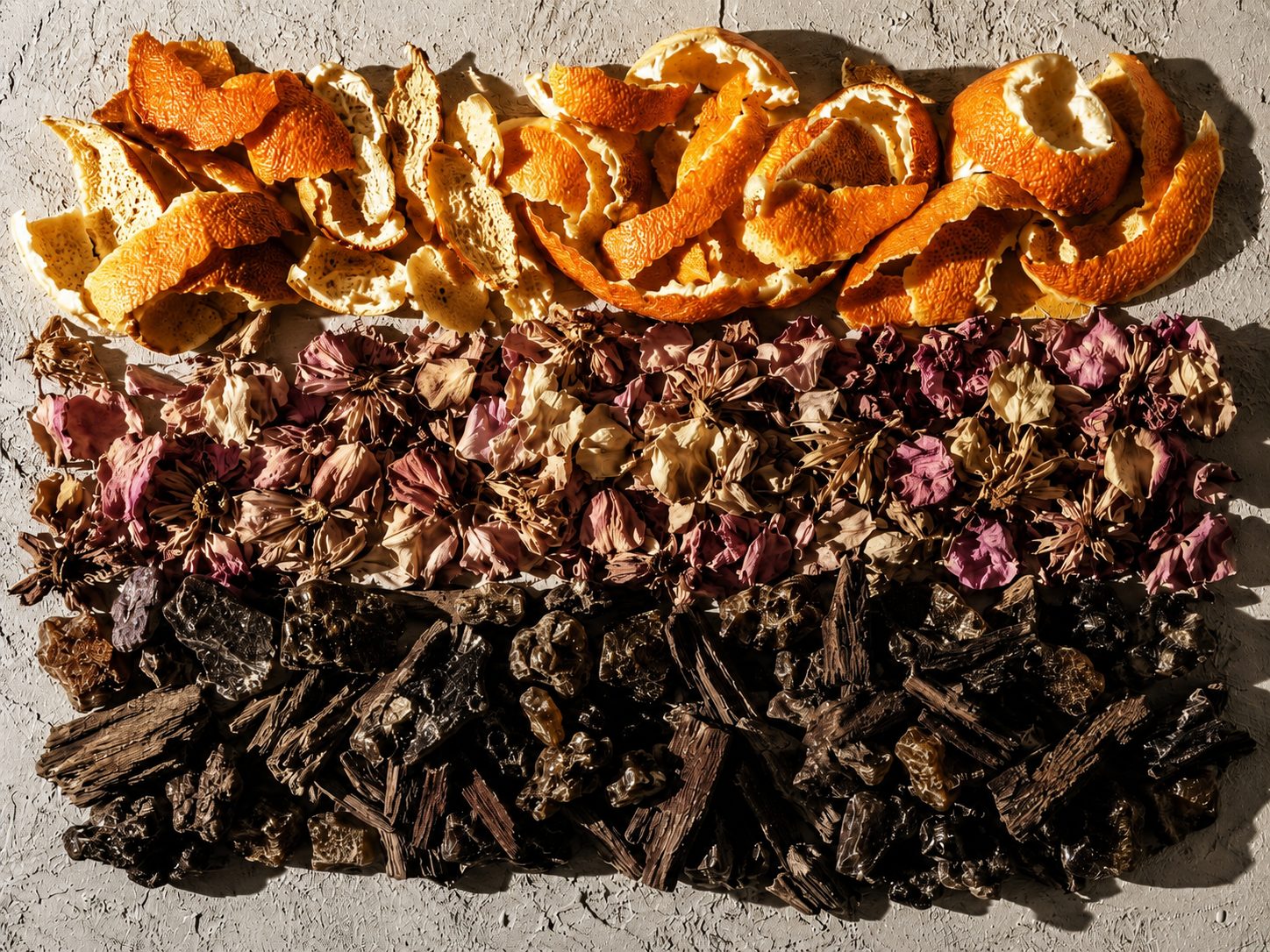
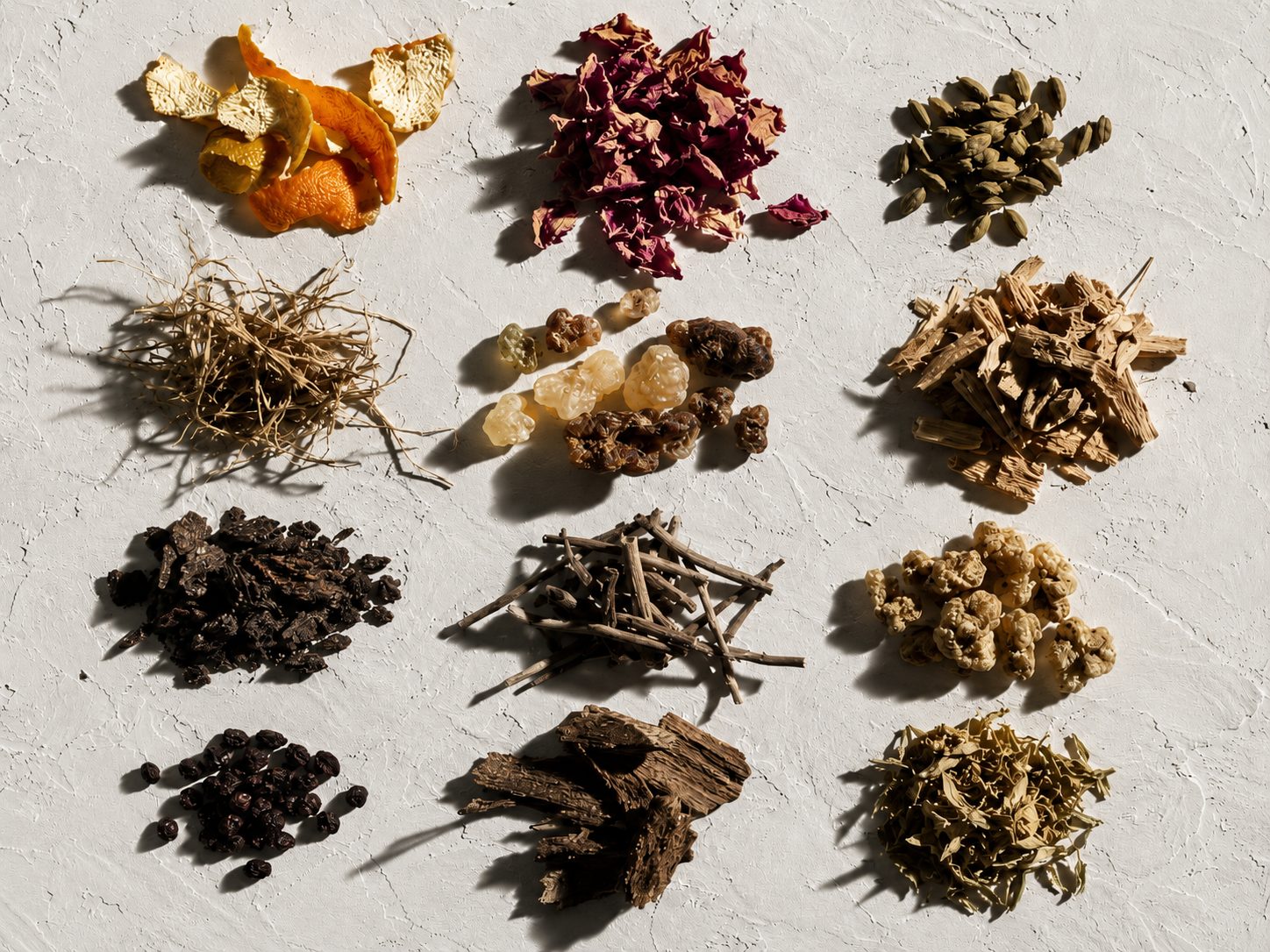
A great many fragrances now list a note called oud, and the number keeps climbing. What that records is what houses choose to declare, not what a laboratory would find in the bottle. Catalogues often carry oud and agarwood as if they were two separate materials, which is a small confession in itself. In modern perfumery, oud can mean a raw material, an accord, a style, a mood, or a promise of depth. A note list is a map of the intended smell. It is not an ingredient disclosure.
01The tree makes it slowly
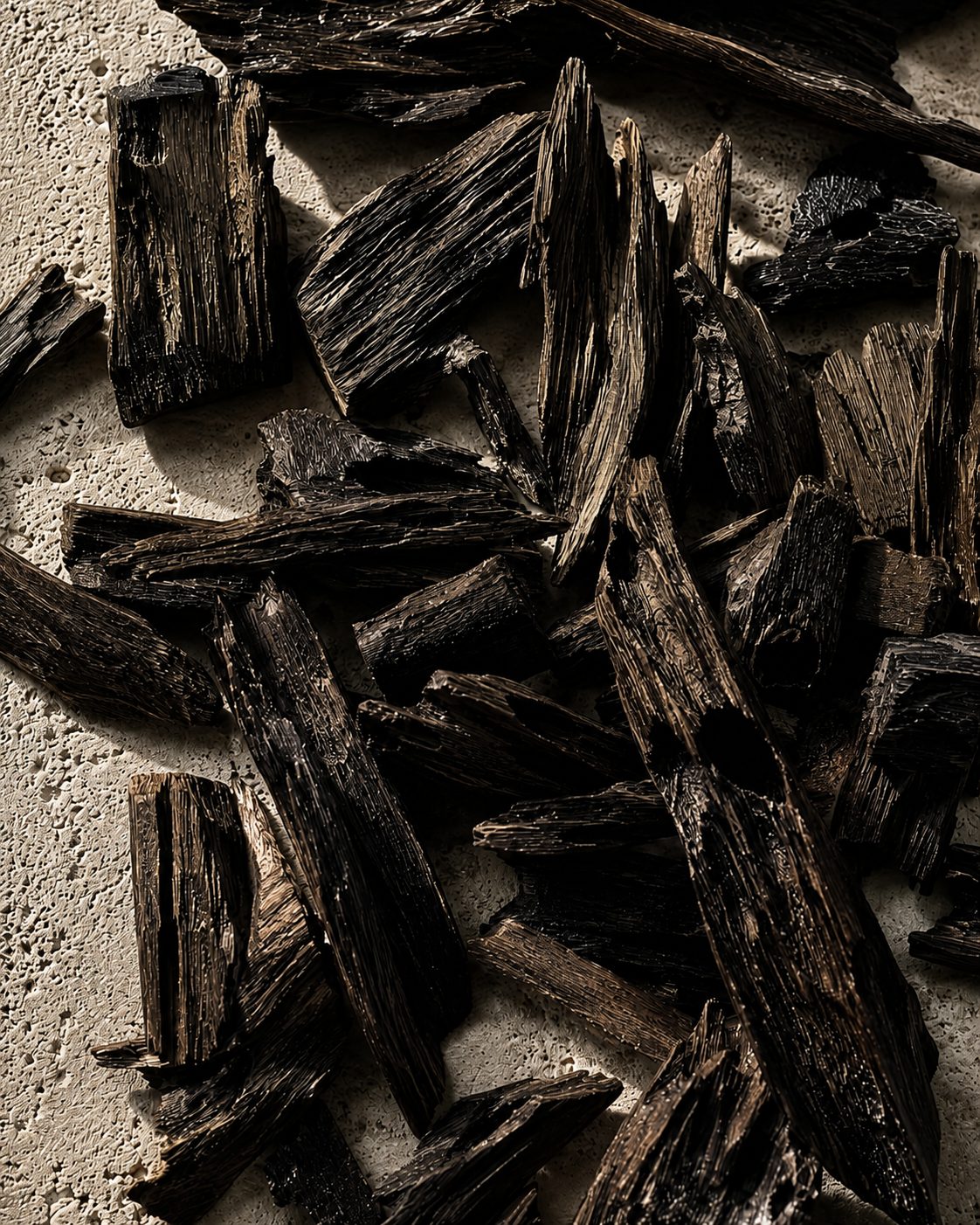
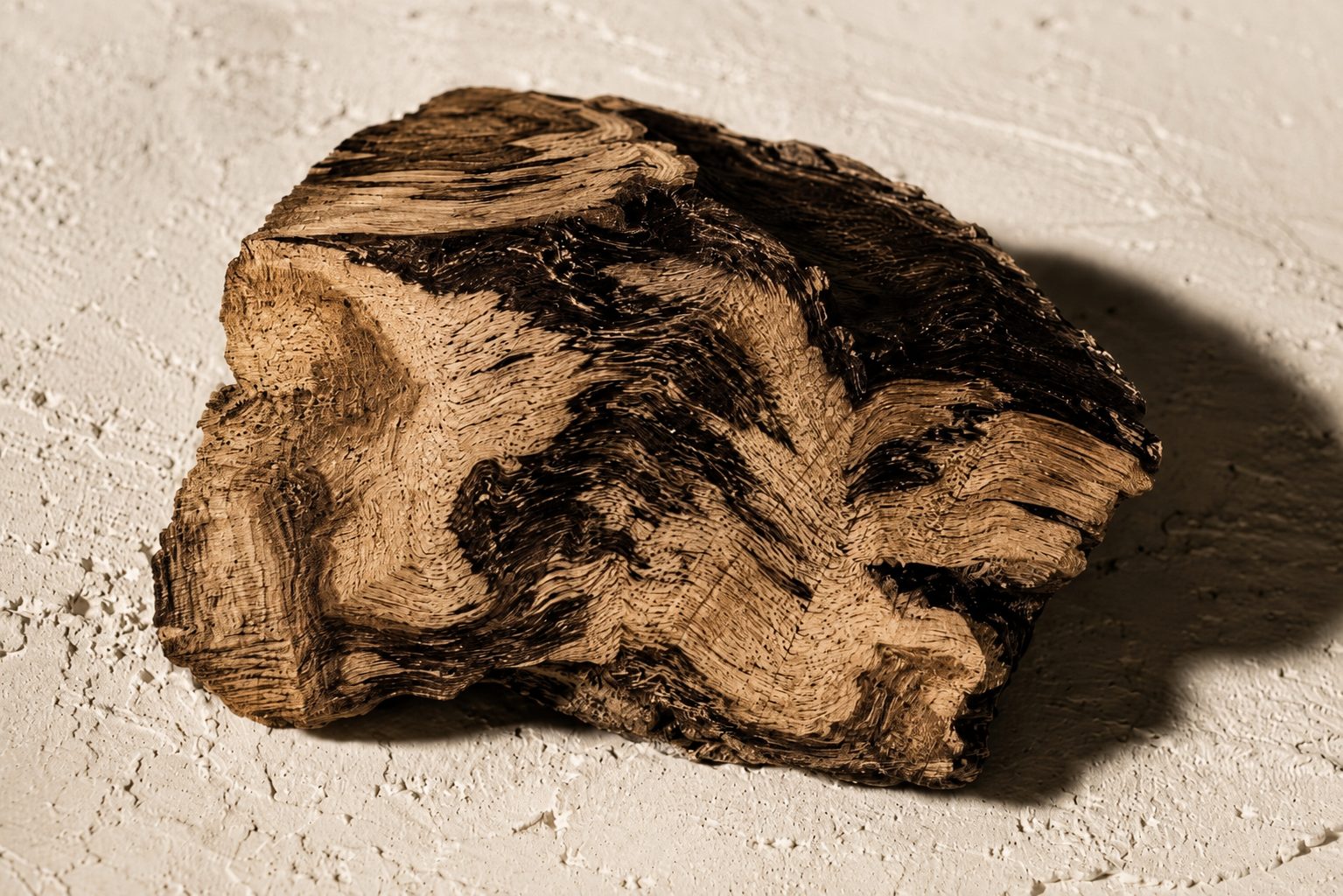
Agarwood does not begin as a dark, perfumed block. It begins inside living trees, mainly species of Aquilaria and Gyrinops, whose healthy wood is comparatively pale and carries almost none of the resinous character that oud is prized for. When the tree is wounded and put under biological or environmental stress, it defends itself. Resin gathers around the damaged tissue, staining and transforming the wood over years. Fungi are part of the story, but the tidy version, one fungus enters and oud appears, is too neat. Injury, microbes, insects, the age of the tree, the species, the climate and simple time can all shape the result.
The chemistry is just as untidy. Studies repeatedly find sesquiterpenes and a family of compounds called 2-(2-phenylethyl)chromones among the molecules behind agarwood's odour, and their proportions shift from sample to sample. That is why natural oud is not one fixed smell. One oil can feel balsamic and honeyed. Another can be smoky, leathery, bitter, medicinal, earthy or animalic. Origin matters, but so does the individual tree, the density of resin, the part harvested, the way the resin was induced, the distillation, and the age of the oil.
This is why the real material is expensive long before anyone pours it into a crystal bottle. Formation takes time and cannot be read perfectly from the outside of a trunk. Harvesting usually means felling the tree, stripping the bark, and carving away the pale wood to isolate the resinous sections. The finest chips are sold for burning. Lesser grades, shavings and powder go to distillation or into blended incense. Every step asks for judgement, and most of the harvested mass is not the prized dark material at all.
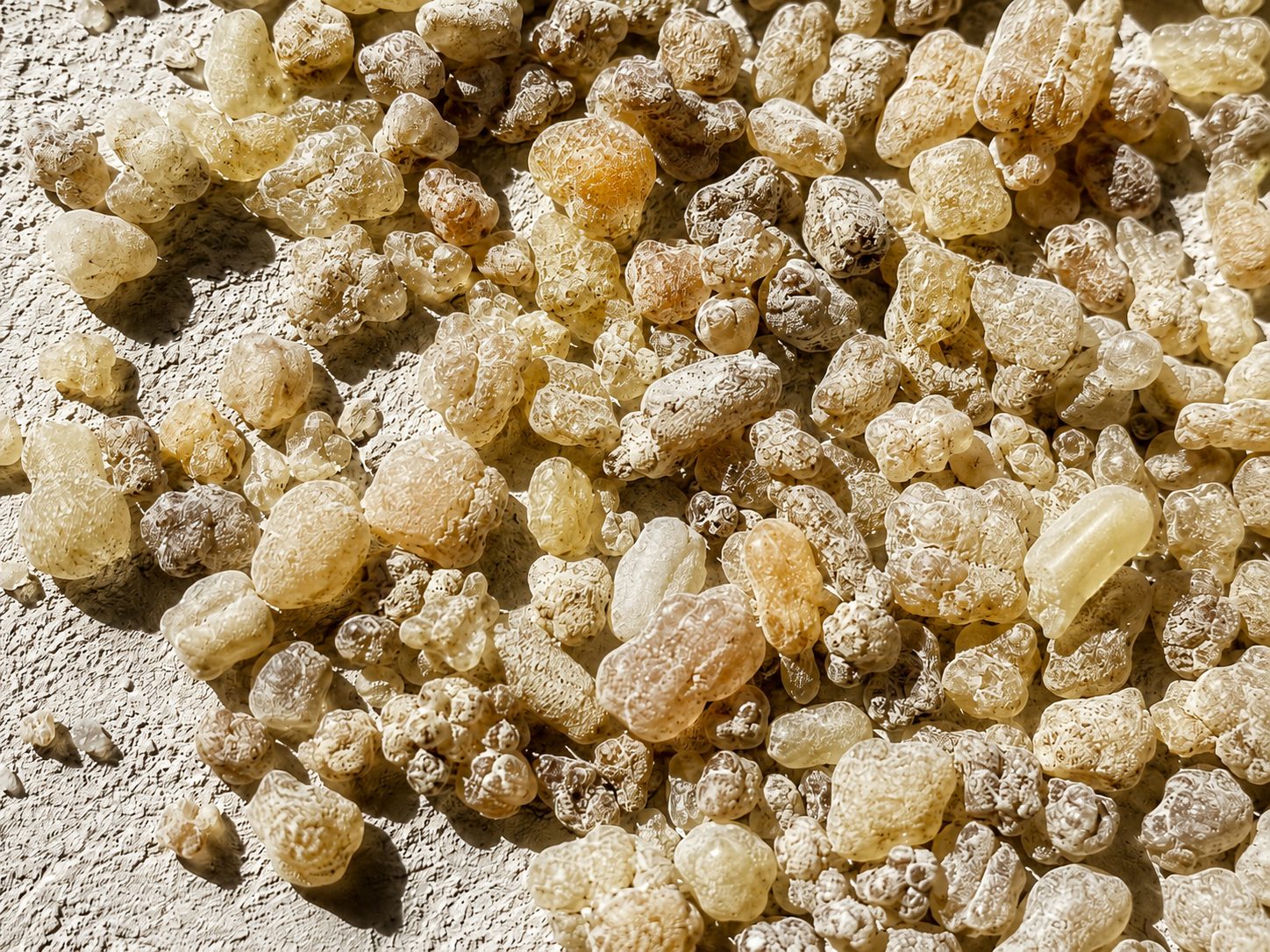
Oud begins with damage. Its value begins with the years that follow.
Then comes grading, a market built as much around trained noses as around scales. Field research by the wildlife-trade monitoring group TRAFFIC, working in the United Arab Emirates, found traders judging chips by aroma when burned, by resin content, by origin, colour, thickness, and the length and quality of the smoke. None of these signs works alone, and several can be faked. Chips are polished, coloured, or soaked to imitate a higher grade. At the very top of the market, the International Tropical Timber Organization has recorded prices reaching as high as one hundred thousand US dollars a kilogram for exceptional agarwood. That is the extreme ceiling, not a sensible benchmark for the ordinary chip or oil sold as oud.
The price, then, does not come from rarity as a luxury slogan. It comes from slow biology, uncertain yield, destructive harvesting, skilled sorting, legal risk, and a market in which tiny differences in aroma can lift a piece of wood into another world of value.
02The word on the bottle
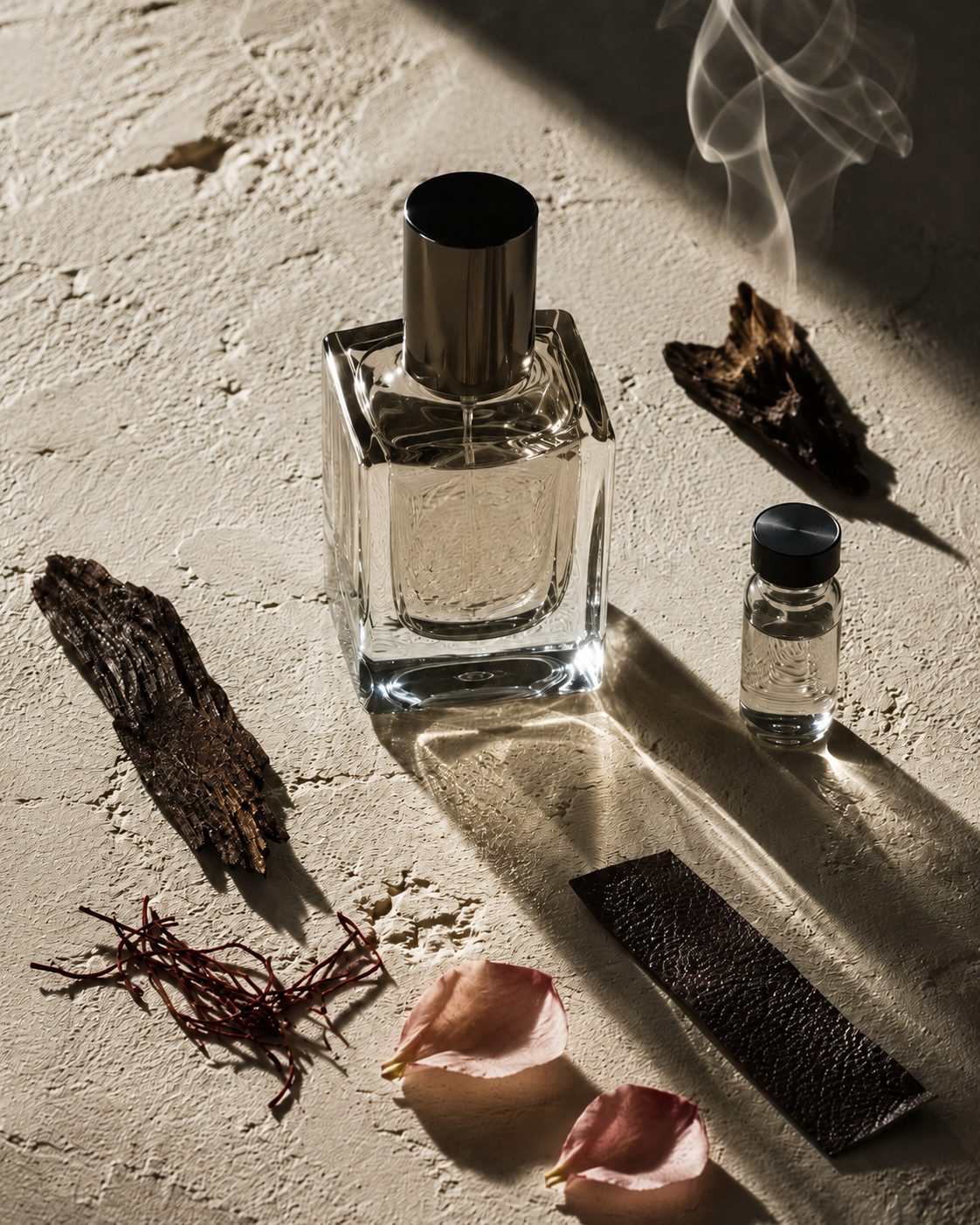
Now return to the spray on your wrist. In Western fragrance, the commonest oud is a reconstruction rather than a measurable dose of natural agarwood oil. The perfumer builds the impression from natural extracts and synthetic materials, choosing the parts of the idea they want: dry wood, smoke, leather, sweetness, medicine, animal warmth, a dark amber glow. The result can be beautiful and technically sophisticated. It may also smell nothing like the oil from any one Aquilaria tree, because it was never trying to reproduce a single specimen.
This is not a secret whispered behind laboratory doors. The ingredient supplier dsm-firmenich describes its oud material as a composition of natural extracts and synthetic molecules, then states plainly that it contains no natural oud and so falls outside conservation controls. The lesson is worth sitting with: a perfumery material can carry the name of a natural note because of the scent it creates, even when the named natural material is entirely absent.
A note can borrow the silhouette of a material without carrying the material itself.
There are good reasons to work this way. An accord gives a perfumer consistency from batch to batch, control over the rougher facets, greater stability, and a cost that can support production at scale. It can even ease pressure on a strained wild resource. The trouble starts only when the language implies a provenance the formula cannot support, or when an accord is sold as though it were rare oil from a named forest, with no evidence offered.
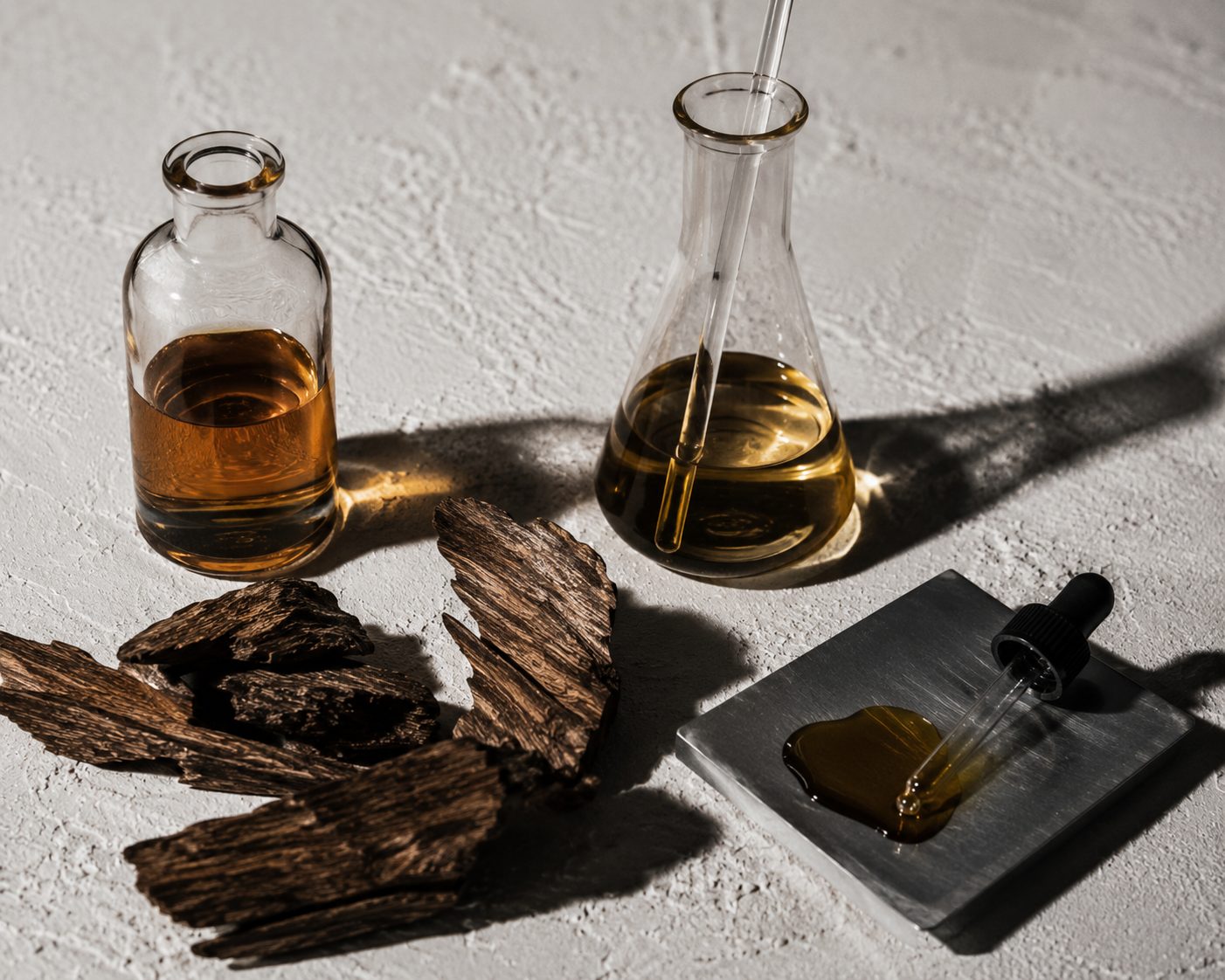
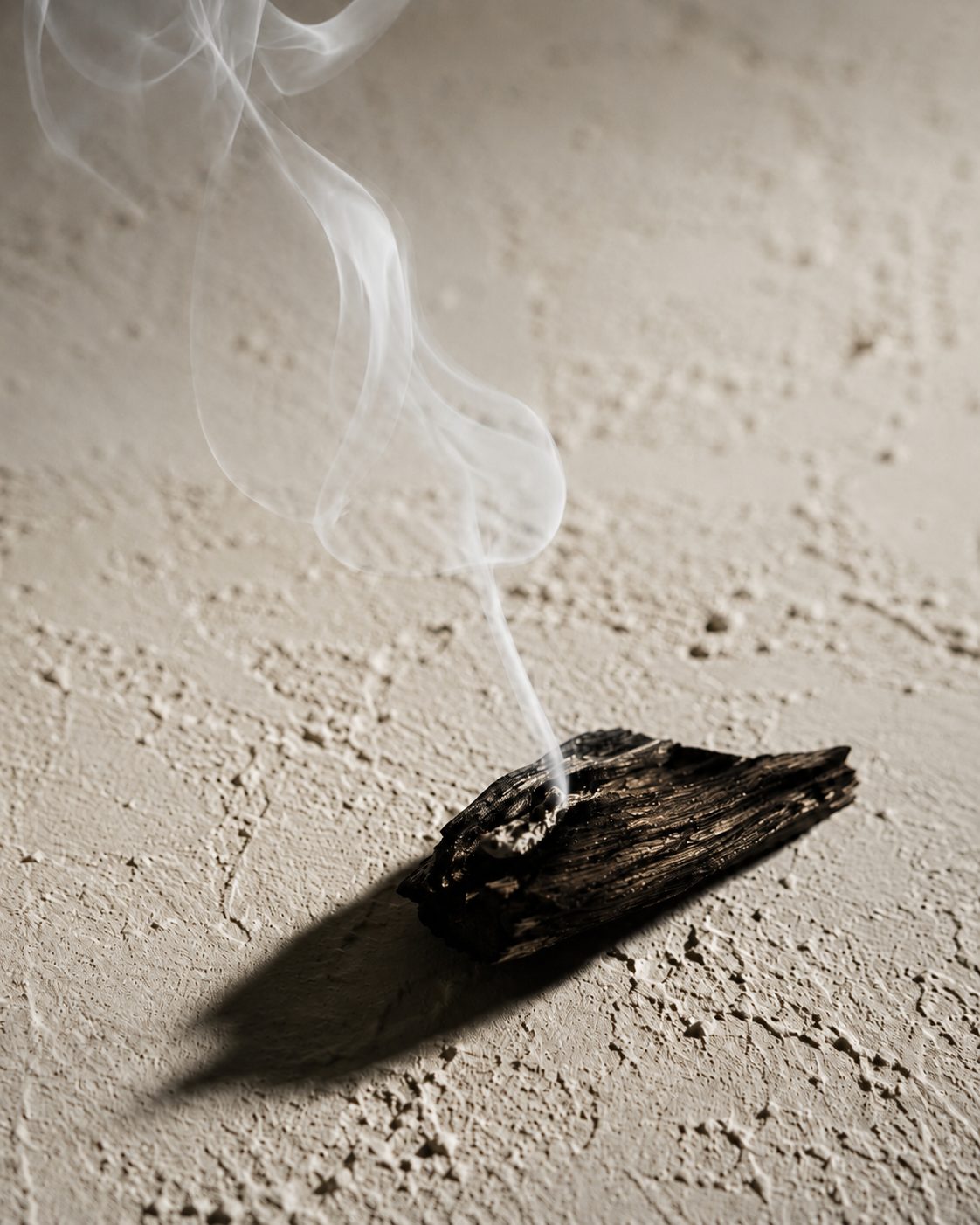
It is also a mistake to let the Western spray bottle define the whole subject. In the Gulf, oud belongs to a broader architecture of scent. Raw chips are warmed or burned so that smoke perfumes a room, clothing and hair. Dihn al oud, the distilled oil, is applied directly to the skin. Bakhoor blends wood or agarwood powder with other fragrant materials for burning. Mukhallat means a blended composition. These forms are worn together, not treated as competing products. Regional writers describe a sequence: clothes take the scented smoke, concentrated oil sits close to the pulse points, and an alcohol-based perfume throws a wider aura. Habits vary by family, generation and country, so there is no single Gulf method. The constant is that oud can be material, ritual and social gesture at once, not merely a base note in a pyramid.
That context changes the question. Instead of asking whether a fragrance smells authentically of oud, ask what kind of oud experience it is offering. Is it imitating burned chips, a dense oil, a rose and saffron mukhallat, or the polished woody shadow that contemporary fine fragrance has taught so many people to call oud? Those are different jobs. Confusing them is how a flexible word becomes a misleading one.
03The future of the wood, and how to read the label
The conservation story is serious, and it is usually told badly. Every species of Aquilaria and Gyrinops has been listed under the international endangered-species convention since 2004. That listing is not a blanket ban. It is a system of permits, including a finding by the exporting country that the trade will not damage the species' survival in the wild.
There is a retail nuance that trips people up. Under the current wording, finished products that contain extracts as ingredients, fragrances among them, are not covered by that particular annotation. A perfume on a counter may therefore carry no visible conservation paperwork even when a natural extract is present. Raw wood, chips and bulk extracts sit much closer to the regulated trade. The absence of a document beside a spray bottle does not, on its own, prove either absence or wrongdoing.
Plantations and artificial induction are now central to supply. Growers wound trees, inoculate them, or use combined physical and chemical methods to provoke resin. This can create a scalable source that is easier to bring into legal trade and can ease pressure on wild trees. It does not make every plantation product identical, and cultivated is not a complete promise of sustainability. Quality and yield still swing with method, tree and time. Traceability, legal harvest and responsible management remain the questions that matter.
So what can a buyer actually establish? Start with the wording. Oud note, oud accord and oud-inspired all describe an effect. They promise no natural agarwood. Natural agarwood oil is a more specific claim, and it should open a conversation rather than close one. Ask for the botanical species, the country of origin, whether the tree was wild or cultivated, how the resin was induced, who supplied or distilled the material, and what documentation applies to that form of trade.
Treat price as a clue, never a proof. A cheap mass-market spray is unlikely to hold a meaningful quantity of the rarest oil, but an expensive bottle can still be built around an accord. Treat smell the same way. Natural oud varies too widely for any single barnyard, smoky or medicinal signature to authenticate it, and a skilled reconstruction can be convincing. In the chip market, colour and surface can be manipulated, and TRAFFIC documented exactly that: colouring, surface treatment and the impregnation of lower-grade or substitute wood.
The most useful evidence is boring in the best possible way. A specific material claim. A traceable supplier. A believable origin. An account of cultivation or harvest. Language that keeps the formula honest about the difference between the material and the fantasy. A house that uses an accord has nothing to apologise for. Synthesis is part of perfumery, and a reconstruction can be safer, more stable and more creatively useful than a token drop of oil added for a story.
Oud deserves precision, because the real thing carries more than a smell. It carries a tree's response to injury, years of resin forming in the dark, and the labour of growers, harvesters, carvers, graders and distillers across South East Asia and the Gulf. You do not need to reject synthetics to respect that history. The bottle can be beautiful without containing the tree. It simply should not ask the tree to carry a story it never supplied.
Analysis drew on the Osmagora fragrance library.
Shivanand, Arbie, Krishnamoorthy and Ahmad, 'Agarwood: The Fragrant Molecules of a Wounded Tree', Molecules, 2022.
Tan, Md Isa, Ismail and Zainal, 'Agarwood Induction: Current Developments and Future Perspectives', Frontiers in Plant Science, 2019.
International Tropical Timber Organization, agarwood market reporting, 2022.
Antonopoulou, Compton, Perry and Al-Mubarak, The Trade and Use of Agarwood (Oudh) in the United Arab Emirates, TRAFFIC, 2010.
dsm-firmenich, OUD FIRBEST technical page; Givaudan, Agarwood Oil Thailand technical page.
Convention on International Trade in Endangered Species (CITES), Appendices and non-detriment findings for Aquilaria and Gyrinops.
Allure, 'What Exactly Is Oud?'; Vogue, 'Attar, the Millennia-Old Fragrance Tradition, Is Poised for a Major Comeback'.