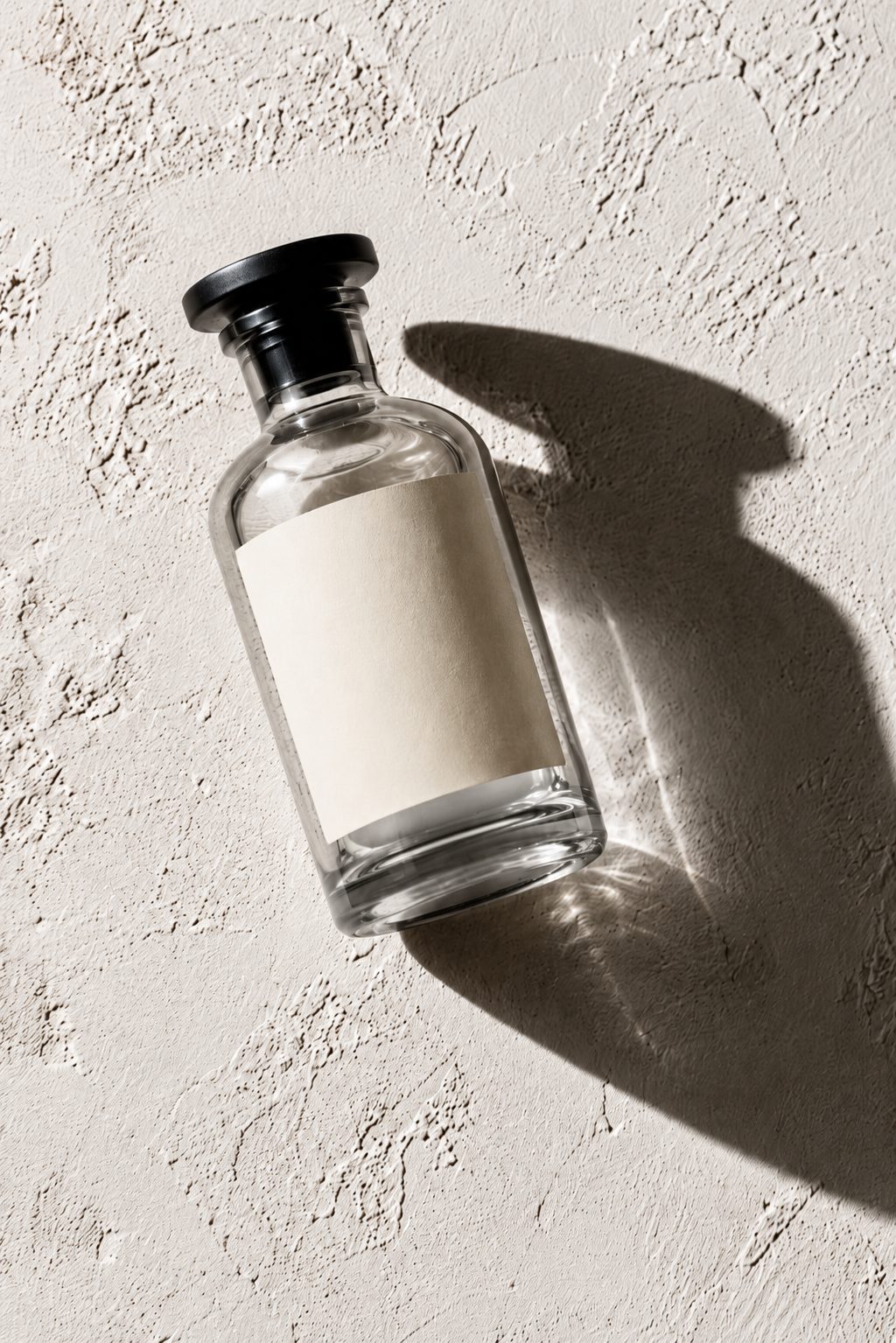
The bottle looks less like a luxury object than a laboratory sample that has somehow learned your name. A plain glass cylinder. A cream label. The fragrance, the place, the date, the person it was prepared for. It reads like a receipt and a birth certificate at once.
That label is one of the most effective pieces of fragrance positioning made this century. It does not ask to be admired. It records what happened. The refusal is the seduction.
The bottle with a birthday
Le Labo opened its first laboratory on Elizabeth Street in New York's Nolita in 2006, founded by Fabrice Penot and Eddie Roschi. The house later compressed its origin into six words: "Born in Grasse. Raised in NYC." The sentence does a great deal of work. Grasse supplies legitimacy, New York supplies attitude, and the full stop between them makes the combination feel inevitable rather than constructed.
The original promise was physical. You entered a shop that looked more workshop than beauty counter. Your fragrance was compounded, bottled, labelled and packed by hand. The label carried the day, and could carry your name. In an industry accustomed to finished bottles arriving sealed from elsewhere, the counter became a small stage on which production appeared to happen for one person at one moment.
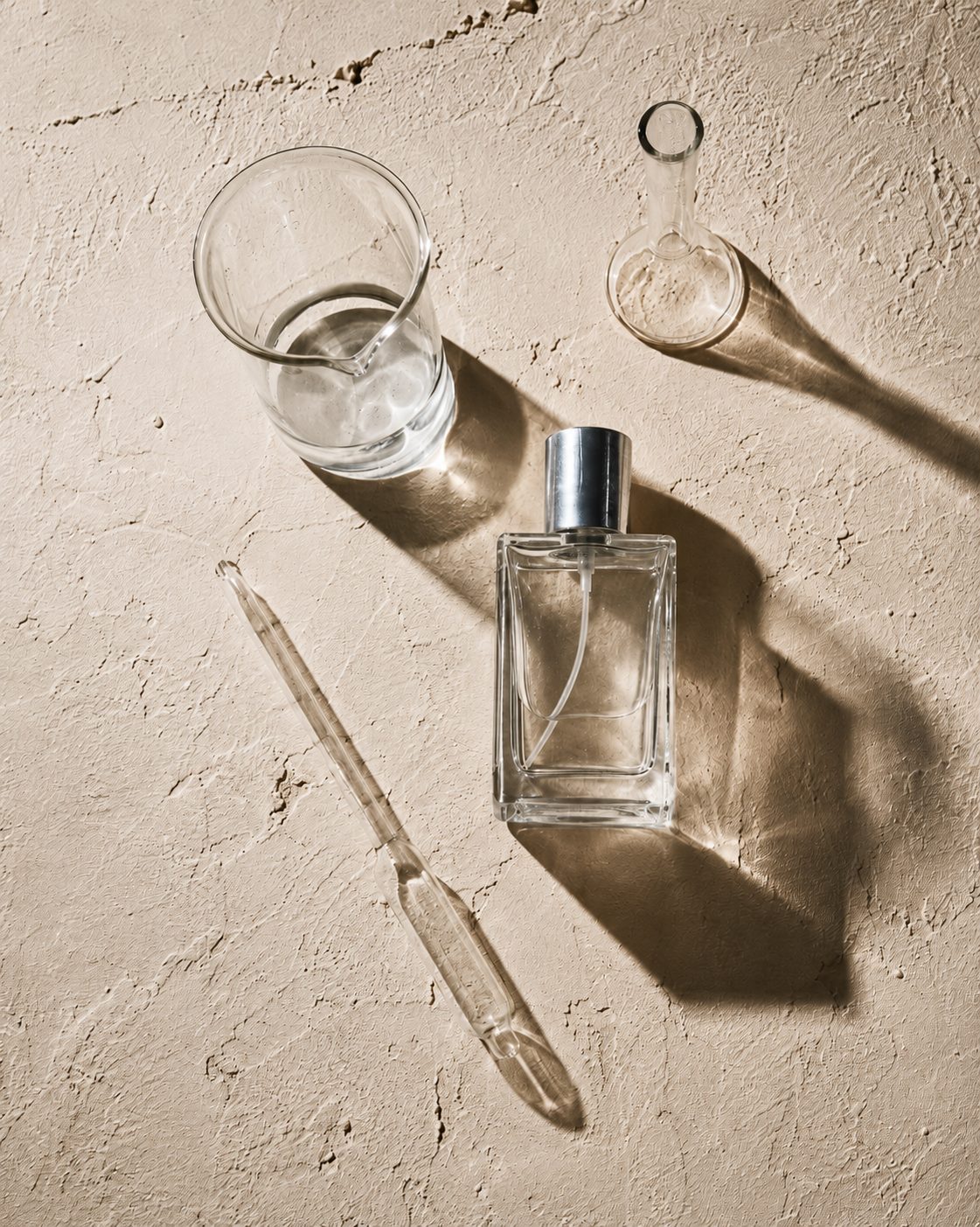
It is important to describe that stage accurately. The perfume is not composed for the customer. Santal 33 does not become a different formula because one buyer rather than another walks through the door. The creative formula and its concentrate already exist. A Le Labo retailer described the process using Santal 33 as its example: the aromatic materials are first macerated into the perfume oil, then that oil is combined with ethanol and water according to its formula to make the eau de parfum. The in-store ritual is fresh compounding and personal labelling, not bespoke perfumery.
Even fresh contains a useful complication. Le Labo's own guidance says a newly compounded eau de parfum typically needs at least fourteen days of maceration after mixing, during which the scent may continue to evolve. The bottle is dated today, but the fragrance may not yet have fully settled into itself. None of this makes the ritual fraudulent. It makes the mechanism clearer. Le Labo understood that modern luxury did not always need more decoration. Sometimes it needed visible care, a trace of labour and a record of place. The customer did not merely receive stock. The customer witnessed an ending.
There is a difference between perfume made for you and perfume made in front of you. Le Labo built a business in that difference.
When a secret becomes a uniform
Santal 33 arrived as an eau de parfum in 2011, developed from Santal 26, the house's sandalwood candle. It was covered at the time as an unusual anniversary move, a personal fragrance born from a home scent rather than the other way around. The result deserved its success. Cardamom, iris and violet sit against sandalwood and cedar, with leathery, musky and smoky effects. It is dry but not austere, familiar but difficult to place, and strong enough to announce itself before the wearer does.
That last quality helped turn it into a social signal. At first, recognising Santal 33 meant recognising the person who had found it. By 2015, Olivia Fleming wrote in The New York Times that it had become a predictable presence on the New York City subway. The following year, The Cut joked that it was weird to live in New York and not smell like the cult. The joke lands because the scent had crossed a line. It was still the same liquid, and it could still smell excellent on skin, but its meaning had changed. A signature scent is partly private pleasure and partly social information. Once enough people wear the same coded object, the code stops indicating discovery. It starts indicating membership. This is the strange fate of a perfectly positioned product. Success does not merely increase sales. It consumes the distinction that made the product attractive. The secret handshake becomes the office uniform.
Then came the acquisition. On 15 October 2014, The Estée Lauder Companies announced an agreement to buy Le Labo. Terms were not disclosed, and the deal closed early the following month. For devotees of an anti-corporate-looking house, the buyer seemed almost too neat a test. Could the laboratory remain a laboratory once it belonged to one of beauty's largest groups?
From the customer's side, the most recognisable elements survived. The plain bottles, personalised labels, workshop language and restrained catalogue remained visible. What changed most clearly was scale. Estée Lauder's later reporting attributed Le Labo's growth to existing products and expanded consumer reach across freestanding stores and department stores, with strong double-digit net sales growth, new points of distribution and flagships in cities such as Beijing and Seoul. That is not evidence that the fragrances became worse. It is evidence that refusal can be distributed. The anti-brand did not stop being a brand when Estée Lauder bought it. The acquisition simply made the brand's system easier to see.
The danger was never that a corporation would make Le Labo look corporate. It was that scale would make its refusal legible to everyone.
Scarcity as a product

Santal 33 made Le Labo ubiquitous. The City Exclusives restore distance.
The collection ties each fragrance to a city and limits its ordinary sale to that place. Gaiac 10 belongs to Tokyo, Vanille 44 to Paris, Poivre 23 to London. Le Labo currently opens the collection more widely once a year: samples worldwide across late summer, full-size bottles worldwide for a single month, and then each scent returns to its hometown for ordinary purchase. This is not scarcity caused by an inability to produce enough perfume. It is scarcity designed as part of the perfume. The city is not merely printed on the label. It becomes a condition of access.
The mechanism works because fragrance is already unusually close to memory. Buying a scent in Tokyo can make Tokyo cling to it. Buying it elsewhere during a narrow window still carries the knowledge that the door will soon close. Availability becomes an ingredient, invisible in the formula but present in the experience. There is an easy cynical reading: scarcity is being manufactured. Of course it is. So are the store, the label, the naming system and the decision to keep the bottles plain. Positioning is the arrangement of choices around a product until the product becomes easier to understand in one particular way. Le Labo's skill is that its arrangements feel like the removal of marketing rather than the addition of it.
The catalogue tells the same story. Le Labo keeps a deliberately small, edited shelf, where a house built for exploration might offer many times as many bottles. That contrast is not a verdict on either approach. It is a demonstration that catalogue size communicates. A large catalogue offers a world to explore. A small one asks the gaps to speak. A small catalogue can suggest discipline, confidence and patience. It can also concentrate attention until one fragrance becomes too large for the house that made it. Santal 33 is both Le Labo's triumph and its warning. The scent helped prove the power of a sharply defined world, then became so widespread that the world no longer felt private.
This is why buying by brand is complicated. A house can be useful. It can teach you what kinds of textures, structures and moods you tend to enjoy. But a house is also very good at making unrelated fragrances feel related before you have smelled them. The bottle, shop and story arrive first. The nose often enters later. Le Labo's fragrances should be judged as fragrances. Santal 33 does not become a bad perfume because someone else wore it in the lift. Nor does a dated label make the liquid more beautiful. The brand's achievement is not that it escaped marketing. It is that it turned marketing into ritual, editing, place and apparent restraint.
The bottle still says your name. The harder question is whether the scent still says anything only you could have chosen.
Analysis drew on the Osmagora fragrance library.
The Estée Lauder Companies, Le Labo brand profile; acquisition press releases, 15 October and 3 November 2014; fiscal 2019, 2025 and Q3 fiscal 2026 filings.
Le Labo, 'About us', Refill program FAQ (14-day maceration), and City Exclusive Collection FAQ.
Liberty London, 'Behind the brand: Le Labo' (compounding process).
Jane Larkworthy, 'Yes, We Candle', W Magazine, 1 May 2011.
Olivia Fleming, The New York Times, 16 November 2015; Kathleen Hou, The Cut, 30 November 2016.