An investigation into Omani frankincense, formula budgets, concentration, creative direction and the uncomfortable gap between the cost of a perfume and the price of its bottle.
Gold arrives with the confidence of an object that was not asked to apologise for its scale. Flowers rise through incense, woods and animal warmth. Before its history is known, the perfume gives away the nature of its brief: abundance was not treated as a defect.
Amouage was founded in Oman in 1983 under the Albusaidi family. A WIPO interview with the company identifies Sayyid Hamad bin Hamoud Al Bu Said as the figure who wanted to carry Omani perfumery into an international house, and Guy Robert as the perfumer commissioned to make Gold. The company’s account is unusually direct: no expense was spared. [1] [2]
That sentence is the beginning of the investigation, not its conclusion. Perfume houses have made “the finest ingredients” almost impossible to interrogate. A note list is not a formula, a high concentration is not automatically a better composition, and a retail price is never a receipt for the liquid alone.
Across the 18,931 fragrances in Osmagora’s library as of 20 July 2026, 150 are filed under Amouage. Among the houses selected for this profile series, that is the second-largest representation. It shows breadth, not what was poured into any bottle. [13]
The royal brief, and the resin beneath it
The origin story has the simplicity of patronage. Oman had oil wealth, a living culture of attars and incense, and a ruler’s circle willing to establish a perfume house as a national gift. Gold was asked to represent Omani magnificence through French fine-perfumery technique, not to find the cheapest route to a familiar market position. [1] [2]
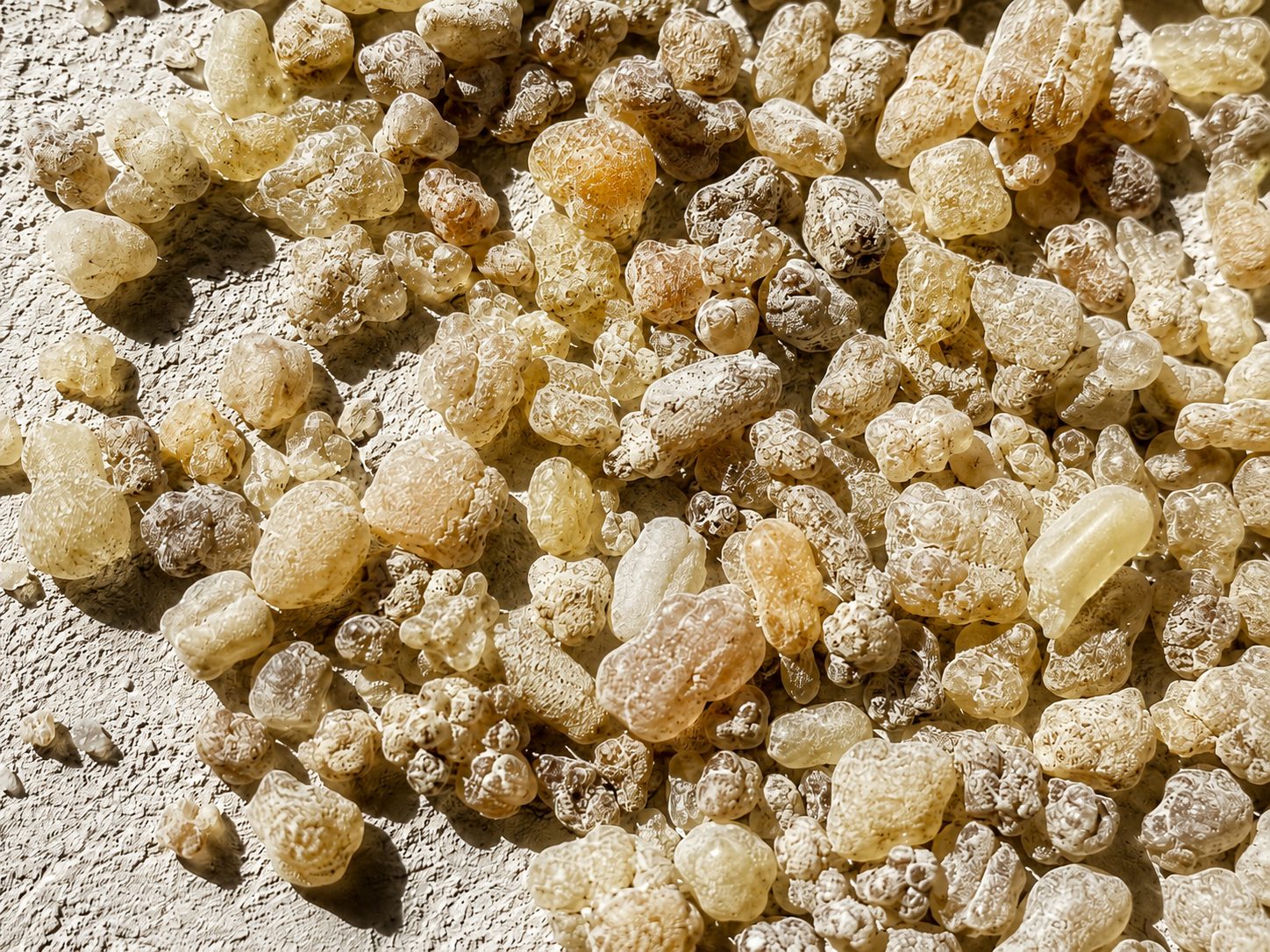
Frankincense sits at the centre of that idea, but the material deserves to be separated from the mist around it. Omani frankincense is the hardened resin of Boswellia sacra. UNESCO describes Wadi Dawkah in Dhofar as an outstanding surviving landscape of the tree and part of the Land of Frankincense, a network of production and trade sites placed on the World Heritage List in 2000. [3]
The resin does not emerge as a ready-made luxury ingredient. Trade reporting from Dhofar described harvesters cutting the bark between March and August, leaving the exudate to harden for roughly two weeks, then sorting it by origin, colour, purity and shape. Published in 2012, the report also warned that declining labour and poor tree-rest cycles could reduce crop and aroma. It is not a current audit, but it shows where cost begins: skilled tapping, waiting, sorting and a supply that cannot be rushed without consequence. [4]
Amouage became custodian of Wadi Dawkah through an agreement with Oman’s Ministry of Heritage and Tourism at the end of 2022. In August 2025, FairWild announced certification of its harvest under a standard for wild-ingredient sourcing. Certification does not reveal how much resin enters a perfume, but it makes the supply chain more visible than the phrase “precious frankincense” ever did. [5]
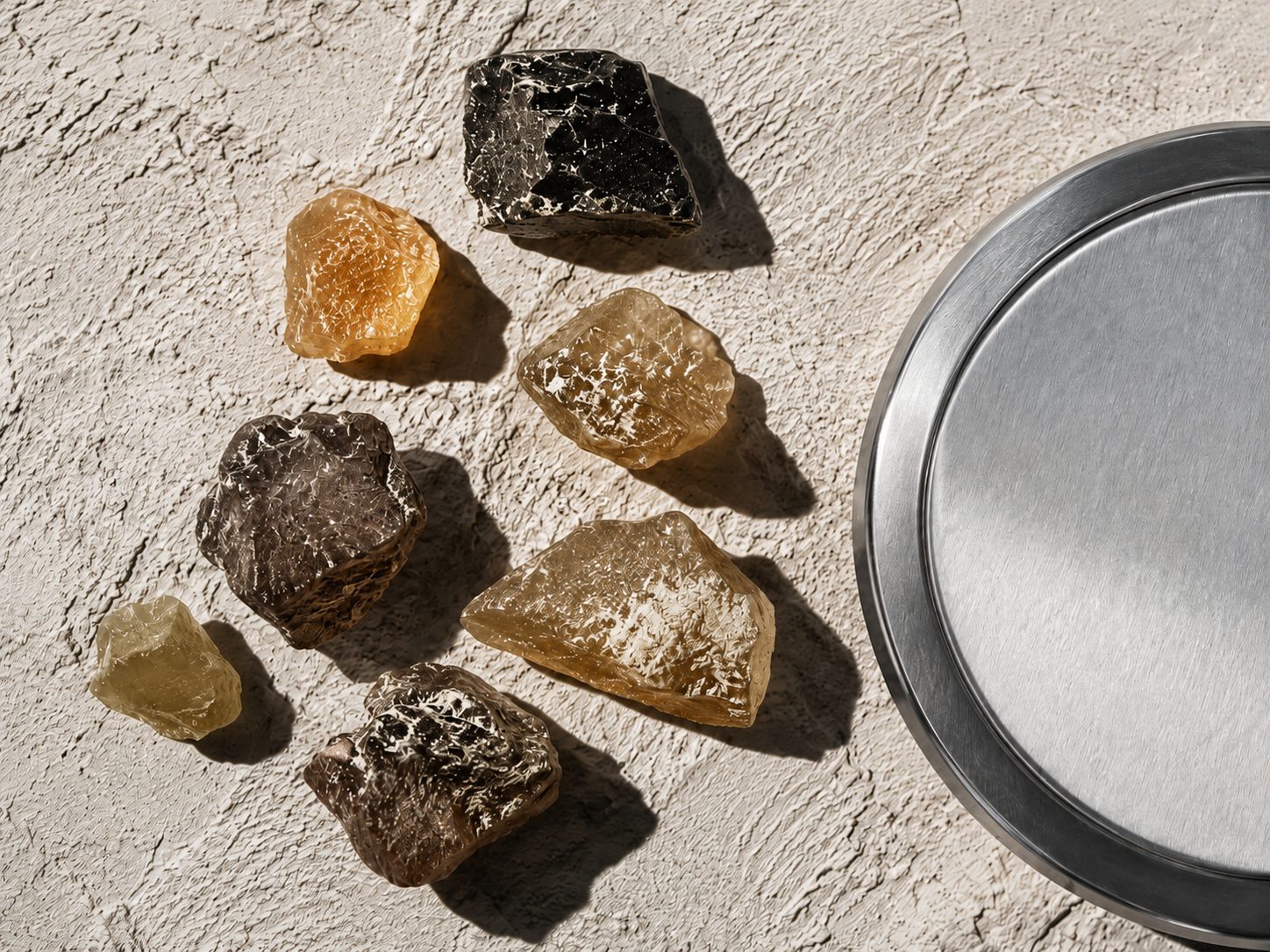
Frankincense is not necessarily the most expensive line in a formula. A wholesale catalogue checked on 21 July 2026 listed Omani Black Sacra frankincense oil at €240 for 100 grams, a diluted orris absolute at €375, and a five-year-aged Thai oud oil at €4,000. These are list prices, not Amouage’s costs, and the materials are not interchangeable. They expose the range hidden inside the word natural. [6]
A frankincense note can also be built or reinforced with synthetic materials. In 2012, then chief executive David Crickmore said Amouage was relying on bespoke synthetics for frankincense effects because of allergen constraints. That statement should not be projected onto every current formula. It proves only that a published note cannot identify whether the formula contains resin, an extract, a reconstruction, or a combination. [4]
Osmagora therefore withholds the requested comparison of frankincense and incense note frequency across Amouage against the wider library. The 150-fragrance house count is available in the current editorial snapshot, but the complete note-level export required to reproduce that percentage was not. Publishing a ratio without the underlying rows would turn database confidence into theatre. [13]
A famous material can give a house its language. It cannot, on its own, explain the bill.
What a larger material budget changes
A formula budget changes the creative work while it is happening. It determines whether a natural can remain at a meaningful dosage, whether a costly effect becomes a trace, whether a substitution is accepted, and how many revisions can be justified before the brief becomes commercially uncomfortable.
Chandler Burr described the mechanism in a 2005 report on Jean-Claude Ellena. Fashion houses set a maximum price for the concentrate when issuing a brief. Sources told Burr that clients often required ingredients to cost no more than $50 a pound at that time, while Chanel No. 19, with iris absolute, was said to cost about $1,000 a pound. These are historical figures, not 2026 averages. Their value is structural: similar bottles can begin with radically different permissions. [7]
Cost enters through dosage as much as prestige. A rare material used at a fraction of one per cent may contribute less than a cheaper material used heavily. Concentration multiplies the result: all else equal, a bottle at 50 per cent concentrate uses twice the concentrate of one at 25 per cent. It still cannot certify quality. A dense inexpensive formula may cost less than a quieter one containing costly orris, oud or jasmine at decisive levels.
Amouage’s strongest evidence is not a note list but a development process described by its own financial controller in 2016. He said a fragrance took around 18 months, that perfumers could submit as many as 250 trials, and that cost became an issue only after the final fragrance had been selected. The statement is corporate testimony, not an independent inspection of the formula book. Even so, it describes a cost gate placed unusually late in the process. [2]
That late gate buys the right to reject a competent formula because it is not strange enough, or to request another modification after a marketable version has appeared. Money does not guarantee beauty. It increases the number of routes that can be explored before compromise becomes mandatory.
Christopher Chong made that freedom legible. He joined Amouage in 2007 and helped turn the house from a formal Omani prestige name into a sequence of authored worlds, beginning with Reflection and continuing through collections built around narrative briefs. Chong was not presented as the technical perfumer. WIPO described him as the person who conceptualised each fragrance, wrote its characteristics and directed interpretations from perfumers in several cities. His work was closer to editor, commissioner and dramaturg. [2] [8]
A generous material budget still needs taste. Without a point of view, abundance produces weight rather than form. During the Chong years, Amouage’s density became dramatic rather than merely expensive. Those are critical descriptions, not formula disclosures. The economics created permission. The creative direction decided what to do with it.
The first privilege of money is not extravagance. It is the time to refuse an acceptable answer.
A larger house, and the price beyond the juice
The Chong era also made Amouage easier to discuss outside Oman, which is not the same as making it easy to smell. By 2016, the company said it sold in 66 countries while producing comparatively limited volumes. Under Renaud Salmon, chief creative officer from 2020, the house widened again. In a 2025 interview, Salmon described Guidance as the fragrance that changed Amouage’s scale, while the interviewer noted the opening of the house’s first two standalone North American boutiques. [2] [9]
Amouage said 2023 retail sales exceeded $210 million, more than double the level three years earlier, with growth across Europe, Asia-Pacific, the Americas and the Gulf. A 2024 trade interview also documented a redesigned Muscat airport shop and exclusive pre-launches with Dubai Duty Free. These are company figures and trade reporting, not a public profit-and-loss statement, but they show widening in physical terms: more doors, stock, staff and pressure for recognisable franchises. [10] [11]
Widening can flatten a house. It can also finance the expensive parts of remaining difficult. Salmon told Fragrantica that older Amouage extraits had been very slow sellers, then explained his decision to make newer extraits materially distinct. The admission reveals the manufacturing problem beneath the romance: a prestigious concentration that barely moves is inventory, not only art. [9]
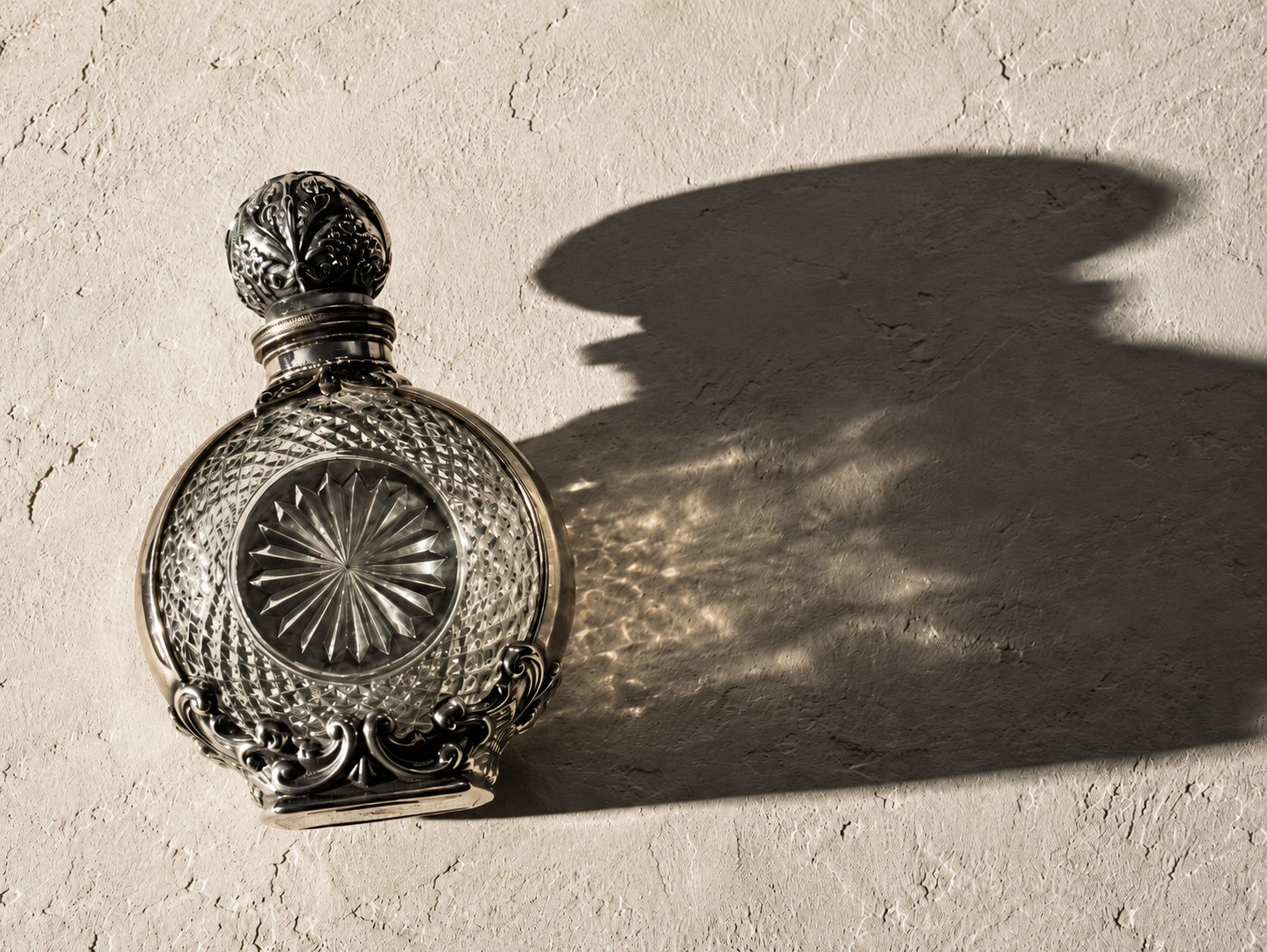
No public Amouage bill of materials answers where the money goes, and any percentage chart would be invention. The defensible ledger begins with concentrate and alcohol, then glass, decoration, pump, cap and carton; filling, quality control and inventory; freight, duties, distribution and retail; boutiques, staff, sampling and communication; then the margin required by the house and its partners. Reporting on high-priced perfume points to rare naturals, costly glass, small runs, climate pressure and weak economies of scale, while making clear that the finished price contains much more than ingredients. [6] [12]
This is why the answer to the reader’s question is both material and theatre. Theatre is not necessarily fraud. A bottle must create recognition before it is opened, and a house distributed across continents pays for infrastructure that a small independent perfumer does not. But theatre becomes misleading when it asks the resin, flower or oud to justify the whole retail price by itself.
Across Osmagora’s library, 3,290 of 18,931 fragrances were classified as Parfum or Extrait on 20 July 2026. The editorial snapshot lacks the complete export needed to calculate Amouage’s split, so Osmagora is not publishing a ranking. Even Epic Woman at 56 per cent, a figure cited by Salmon, is evidence about one product, not a reproducible house-wide count. [9] [13]
What can be said with confidence is more interesting than a vague defence of luxury. Amouage began with patronage that placed symbolic achievement before ordinary start-up economics. During the Chong years, the company described a development system in which cost entered after creative selection. Under Salmon, the house has become much larger while continuing to use concentration, long development and material richness as part of its identity. [2] [9] [10]
That does not prove every Amouage is worth its price, nor that every expensive bottle contains an expensive formula. It proves that money can alter the sequence of decisions. Most perfume briefs ask what can be made within the number. Amouage’s founding question was closer to the reverse: make the perfume first, then discover what the number must become.
Money can remove a constraint. It cannot remove the need for judgement.
SOURCE NOTES
Sources and attribution
1. Amouage, “Our story”. House account used for the 1983 founding, Albusaidi family patronage and current account of its purpose. Open source
2. WIPO Magazine, Catherine Jewell, “Branding the fragrances of the Orient: an interview with Amouage”, 3 October 2016. Used for Sayyid Hamad bin Hamoud Al Bu Said, Guy Robert and Gold, the 18-month development cycle, up to 250 submissions, the late cost gate, Christopher Chong’s role and 66-country distribution. Corporate statements are attributed as such. Open source
3. UNESCO World Heritage Centre, “Land of Frankincense”. Used for Wadi Dawkah, Boswellia sacra and the World Heritage context. Open source
4. Condé Nast Traveler, Susan Hack, “In the Cradle of Scent”, 26 December 2012. Used for the Dhofar harvest sequence, sorting, labour and trade conditions reported at the time, and the historical statement about synthetic frankincense effects at Amouage. Open source
5. FairWild Foundation, “Amouage Earns FairWild Certification for Wadi Dawkah”, 11 August 2025. Used for Amouage’s custodianship since the end of 2022 and the 2025 certification. Open source
6. Hermitage Oils, wholesale catalogue and Black Sacra product listing, prices checked 21 July 2026. Used only to illustrate public supplier price differences. These are list prices, not Amouage procurement costs. Open source
7. The New Yorker, Chandler Burr, “The Scent of the Nile”, 6 March 2005. Used for the historical explanation of concentrate budgets, supplier prices and formula cost ceilings. Open source
8. CaFleureBon, “Mr. Chong’s Opus: An Interview With Christopher Chong”, 30 January 2011. Used for the 2007 start of Chong’s Amouage period and the early chronology of his collaborations. Open source
9. Fragrantica, Patric Rhys, “Guidance and Reflection: Renaud Salmon on Five Years at Amouage”, 17 March 2025. Used for Salmon’s 2020 appointment, Guidance’s effect on scale, North American boutiques, the extrait discussion and the attributed Epic Woman concentration. Open source
10. Amouage press release via PR Newswire, “2023: Amouage reports outstanding results with sales growing by +24%”, 22 February 2024. Used for company-reported 2023 retail sales and geographical growth. Open source
11. The Moodie Davitt Report, Hannah Tan, interview with Renaud Salmon, 3 September 2024. Used for current travel-retail expansion at Muscat International Airport and Dubai Duty Free. Open source
12. Financial Times, “Why has perfume become so expensive?”, 19 June 2024. Used for the broader discussion of rare materials, glass, small scale, climate pressure and price. Paywalled source. Open source
13. Osmagora internal library snapshot, 20 July 2026. The library contained 18,931 fragrances, including 150 Amouage entries, and 3,290 fragrances classified as Parfum or Extrait. Frankincense and incense frequency, and the Amouage concentration split, were withheld because the complete note-level and concentration-level exports were not available in the editorial snapshot.